Wire vs Solid Garage Shelving: Which Is Better? (November 2026)
For wire vs solid garage shelving, choose wire for airflow and easy viewing or solid for small items and a continuous base. Check shelf dimensions and load limits before choosing a rack.
On this page (11 sections)
- Wire vs solid garage shelving: what is the main difference?
- Which shelf style gives better airflow and visibility?
- Which type is easier to keep clean?
- How much weight can wire or solid shelves hold?
- When is wire garage shelving the better choice?
- When does solid garage shelving make more sense?
- How deep should garage shelves be?
- How should you set up and anchor either shelf style?
- What mistakes make wire or solid shelves less useful?
- Which rack fits your garage storage plan?
- How do you choose between wire and solid garage shelving?
Choose wire for airflow and visibility or solid shelves for small items and a continuous base. The wire vs solid garage shelving decision starts with the shape of your stored items, then the rack's size and load limits.
Large, flat-bottom bins often work on either surface. Loose hardware, narrow bottles and equipment with small feet need closer attention to the gaps or panel beneath them.
Neither surface automatically makes a rack stronger. Buy the frame and shelf layout that fit your storage, rather than choosing by material or total capacity alone.
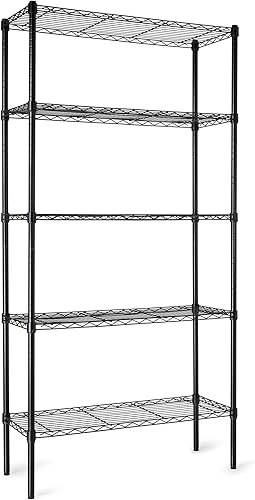

Wire vs solid garage shelving: what is the main difference?
Wire has gaps; solid shelving has a continuous panel. That difference affects what stays upright, what can fall through and how easily you can see or clean the shelf.
Wire lets light and air pass between levels. Solid panels provide support wherever a small object touches the surface, but they also collect dust and can block your view from below.
Start by sorting your storage into containers, loose objects and heavy equipment. Each group places different demands on the surface, even if all 3 share the same rack.
Wire vs solid garage shelves for small items
Solid shelves suit loose items better, while wire works best when small pieces live inside bins or trays. A screw can fall through wire even when the shelf easily supports its weight.
Look underneath containers as well as at their outside size. Narrow feet, raised runners and flexible bottoms may sit awkwardly across wire gaps.
A solid surface also makes it easier to slide a parts organizer into place. Still, closed organizers are more useful than loose piles because you can carry them to a work area.
What counts as a solid garage shelf?
A solid shelf uses a continuous panel, often metal or a board. “Metal shelving” describes the material, so confirm the actual surface before buying a rack specifically for small-part support.
The Letaya option here has steel shelves with support ribs. Confirm its panel design if loose hardware is your main reason for choosing it.
Solid doesn't mean sealed or watertight. Joints, edges and fastener holes can let a spill reach the shelf below.
Which shelf style gives better airflow and visibility?
Wire gives air and light more paths through the rack. It suits open storage where you want to see container labels and avoid dark spaces between levels.
That benefit shrinks when every shelf is covered by wide bins or a full liner. Leave useful gaps between containers instead of packing each level so tightly that you can't remove anything.
Airflow also doesn't replace drying. Dry wet gear before putting it away, and don't expect an open rack to solve garage dampness.
Solid shelves can catch dust falling from above, but they don't keep stored items clean on their own. Use lidded containers for supplies that need dust protection.
Which type is easier to keep clean?
Solid panels are simpler to wipe; wire lets dirt fall through. Choose based on the mess you expect and what sits beneath the rack.
A flat shelf lets you gather dry debris into one place. Wire requires cleaning around the bars and connections, while dirt that passes through still needs to be swept off the floor or lower containers.
For either surface, remove containers before cleaning and follow the finish's care directions. Dry damp areas and check joints, edges and shelf supports for damage.
Use a compatible tray under containers that might drip. Oils, cleaners and other chemicals need their own storage precautions, and some belong in dedicated cabinets rather than on an open rack.
Don't treat a shelf liner as spill containment unless it is designed for that purpose. A flat sheet can simply redirect liquid toward an edge.
How much weight can wire or solid shelves hold?
Use the exact rack's per-shelf and total limits. The surface alone doesn't tell you how much weight the frame, connections and shelf supports can carry.
Amazon Basics states a limit of 350 lb per shelf when evenly distributed. REIBII claims 640 lb per tier and 3,200 lb overall, while Letaya claims a 5,000 lb total.
Those figures describe different limits, so don't compare them as if they were interchangeable. A high rack total doesn't authorize placing the entire load on one level.
A compact machine can also load a shelf differently from several evenly spaced boxes. Small feet concentrate weight, even when most of the shelf looks empty.
Our guide to garage shelf weight limits explains how to read capacity figures and spread loads. Check the instructions for concentrated loads before choosing a shelf for dense equipment.
How should you load either shelf style?
Keep dense items low and spread loads as directed. Place lighter, less-used supplies higher, where lifting and reaching are harder.
Include the weight of containers, trays and liners in your storage plan. Avoid balancing a heavy item near the front edge just because it is easier to grab there.
If a shelf shifts, a connection loosens or a post bends, stop adding weight and follow the manufacturer's unloading and repair guidance. Don't try to straighten a loaded rack.
When is wire garage shelving the better choice?
Choose wire for bins, boxed supplies and larger tools that sit securely across the gaps. It is especially useful when you want adjustable levels without blocking light between shelves.
Amazon Basics: for a narrow storage strip
The Amazon Basics rack measures 36 x 14 x 72 in and has 5 shelves that adjust in 1 in increments. Its shallow footprint suits a wall beside a walkway better than a deep rack.
Choose it for smaller containers and supplies you want within easy reach. The close adjustment steps help reduce wasted space above short boxes while leaving taller openings where needed.
Skip it for deep totes or equipment whose base needs more support front to back. Measure the container's base and its widest point, including handles, before deciding it fits.
REIBII: for several containers across each level
The REIBII unit measures 55.5 x 18 x 71 in, with 5 adjustable wire shelves and reinforced support bars. That wider layout suits rows of containers that would crowd a narrow rack.
Choose it when you have a broad wall section and want several storage groups on each level. Check the usable space between posts before planning how many bins will sit side by side.
Skip it if most of your storage is loose parts and you don't want organizers. Covering every shelf to solve that problem gives up much of the reason to choose wire.
For more open-shelf options, compare our guide to wire shelving for garages.
When does solid garage shelving make more sense?
Choose solid shelving when a continuous base solves a daily storage problem. Small boxes, narrow containers and parts organizers are easier to arrange when there are no gaps beneath them.
A solid surface can also make sense for items you move frequently across the shelf. Check that the panel material suits the garage conditions, especially if considering wood-based shelves in a damp space.
Letaya: for bulky containers and workshop supplies
The Letaya rack measures 71.3 x 24 x 70 in and has 4 adjustable steel shelves. Locking pins secure the shelf positions, and ribs support the steel shelves.
Choose it when large containers need a broad, deep platform and you have room to reach them. The footprint makes sense only if you can use that extra shelf area.
Skip it for a tight parking bay or storage made up mostly of small bottles and shallow boxes. Four levels may also leave you wanting more separate shelves for short items.
Plan what goes at the back before buying. A deep shelf becomes awkward when daily supplies sit behind heavy containers you must move first.
How deep should garage shelves be?
Choose the shallowest shelf that fully supports your regular storage. Extra depth helps with bulky containers, but unused space at the back costs floor area and makes access harder.
Measure container bases, lids and handles. Then check the shelf's usable dimensions, since outside rack measurements don't always equal clear storage space between uprights.
Our guide to garage shelf depth explains how to match shelf depth to storage needs. If bins are your main load, see garage shelves for totes and bins for a container-first approach.
Mark the full rack footprint on the floor with painter's tape. Open the car doors, nearby cabinets and garage access door to check the space you actually use.
Leave enough height above each container to lift or pull it out. For a fuller overview of rack size and placement, see the garage shelving buying guide.
How should you set up and anchor either shelf style?
Set shelf heights around your containers, assemble the rack fully and complete any required anchoring before loading. Changing shelf positions is easier while the unit is empty.
Use your tallest regular items to plan the openings. Leave room for your hands rather than setting each shelf barely above the container below it.
Follow the assembly sequence and seat every connection before adding weight. Amazon Basics uses tool-free assembly, and REIBII has a bolt-free design; neither feature removes the need to check connections.
Put the rack on a suitable floor and adjust leveling feet where included. Use the rack's approved method rather than makeshift shims or modifications.
Freestanding doesn't mean anchoring is unnecessary. Follow the unit's instructions, and match fasteners to the wall structure rather than assuming any screw will hold.
REIBII includes anti-tip hardware, but the wall still needs a suitable connection. Our garage shelving anchor guide explains what to check before securing a rack.
Don't climb the shelves or drag a loaded unit into position. Keep access clear so nobody needs to pull on the frame to reach something behind it.
What mistakes make wire or solid shelves less useful?
Buying around capacity alone is the biggest mistake. A rack can offer ample load capacity yet waste space because its shelves don't fit your containers or your reach.
Other common mistakes are easy to avoid:
- Buying bins afterward: choose shelf spacing and depth around containers you already use or plan to keep.
- Ignoring the base: check feet, runners and flexible bottoms before placing an item on wire.
- Overfilling deep shelves: keep daily supplies near the front and group occasional items behind them.
- Adding an unsuitable liner: use a flat, secure liner compatible with the shelf and stored materials.
- Storing everything loose: organizers make small supplies easier to find on either surface.
You also don't need one surface throughout the garage. A wire rack with a few contained storage zones can serve mixed supplies without turning every level into a solid shelf.
Which rack fits your garage storage plan?
Choose Amazon Basics for a shallow storage strip, REIBII for rows of bins or Letaya for bulky containers. Their different footprints and shelf layouts matter more than choosing the largest capacity number.
| Product | Best for | Surface | Size (W x D x H) | Shelf adjustment | Our score |
|---|---|---|---|---|---|
| Amazon Basics 5-Shelf Wire Garage Rack | narrow garage aisles | Steel wire | 36 x 14 x 72 in | 1 in increments | 8.9 |
| REIBII 5-Tier Wire Garage Shelving | rows of bins | Steel wire | 55.5 x 18 x 71 in | 8.4 | |
| Letaya 71-Inch 4-Tier Steel Shelving | bulky workshop supplies | Steel shelves | 71.3 x 24 x 70 in | 8.1 |
Before ordering, assign a job to each shelf. If you can't name what will use the extra width or depth, a larger rack may simply take space away from parking and movement.
For mixed storage, start with the items that are hardest to accommodate. Heavy equipment, deep totes and narrow-base containers should drive the choice before lightweight boxes.
How do you choose between wire and solid garage shelving?
For wire vs solid garage shelving, let the least forgiving item decide the surface. Choose wire when your containers sit securely across gaps; choose solid when small bases or loose supplies need continuous support.
Pick Amazon Basics when preserving aisle space matters, REIBII when you need more room across each wire shelf, or Letaya when bulky storage justifies a broad, deep rack. Verify usable dimensions and loading instructions before committing.
Make a final check with your largest container and your normal parking layout. For the next planning step, use our garage shelving guide to match the rack to your space.
Frequently asked questions
Is wire or solid shelving better for a garage?
Wire shelving suits bins and larger supplies when airflow and visibility matter; solid shelving suits small parts, narrow containers and objects that need a continuous base. Choose around the items you reach for most, then check the rack's size, per-shelf capacity and setup requirements.
Do solid shelves hold more weight than wire shelves?
Solid shelves aren't automatically stronger than wire shelves; capacity depends on the frame, shelf supports, connections and loading pattern as well as the surface. Compare the exact models' per-shelf and total limits, and check whether those limits require evenly distributed loads or a particular setup.
Do wire garage shelves need liners?
Wire shelves need liners only when their gaps interfere with what you store; bins usually work better for loose hardware, while a suitable liner can support narrow bases. Keep any liner flat and secure, follow the rack's instructions, and remember that adding a liner doesn't increase capacity.
Can wire shelving be used for heavy garage items?
Wire shelving can hold heavy items when the rack's capacity and loading instructions allow it; check each shelf's limit, not just the rack total, and account for concentrated loads under small feet. Keep dense items low, spread weight as directed and complete any required anchoring before loading.


