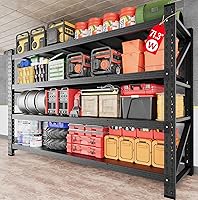
How Much Weight Can Garage Shelves Really Hold?
A garage shelf weight limit applies only to the load and setup the manufacturer specifies. Stay within both the per-shelf and total-unit limits, spread loads as directed, and meet assembly, floor, and anchoring requirements.
On this page (8 sections)
- What does a garage shelf weight limit mean?
- How do you calculate the capacity you need?
- What affects how much weight garage shelves can hold?
- Which shelving fits your loads and garage layout?
- Do wall anchors increase a garage shelf's weight limit?
- How should you load and care for garage shelves?
- Do shelf ratings apply to overhead garage storage?
- Which garage shelf weight limit should you choose?
A garage shelf weight limit tells you how much a shelf or complete unit can carry under the manufacturer's stated conditions. You must stay within both limits and follow the required setup and load pattern.
Start with the weight of your stored items, including their containers. Then choose a rack that fits those loads without forcing heavy boxes onto upper shelves or leaving bins hanging over the edges.
What does a garage shelf weight limit mean?
A garage shelf weight limit is the rated maximum for a particular shelf or unit, not a promise that any arrangement of that weight is safe. The instructions define the conditions that apply.
A five-tier rack might allow 400 lb per shelf and 2,000 lb across the whole unit. Putting 500 lb on one shelf still exceeds its limit, even if the other shelves are empty.
Some ratings specify evenly distributed loads. That means weight spread across the supported surface, rather than concentrated in a toolbox foot, a narrow machine base, or a pile at the front edge.
Don't assume a capacity applies after removing braces, changing supports, or assembling a different configuration. Check the instructions for the arrangement you intend to use.
How do you calculate the capacity you need?
Make a shelf-by-shelf load plan before choosing a rack. Count the containers as well as their contents, and weigh dense items when their weight is uncertain.
Use a simple worksheet:
| Planned shelf | What to record |
|---|---|
| Lowest shelf | Heavy tools, parts, and filled containers |
| Middle shelves | Bins and supplies you use often |
| Upper shelves | Lighter items you can lift safely |
| Whole unit | The sum of all planned shelf loads |
For example, 4 filled bins weighing 45 lb each create a 180 lb shelf load. Adding a 35 lb toolbox brings that shelf to 215 lb, regardless of the space still available.
Choose capacity above your current load if you expect to add supplies. There is no single spare-capacity percentage that suits every rack, and extra capacity never excuses an unsupported load pattern.
Dimensions matter just as much as weight. Our guide to what size garage shelving you need helps you allow for bins, uprights, and access around the unit.
What affects how much weight garage shelves can hold?
Load placement, secure connections, and a stable base affect how the rack carries weight. A high capacity number cannot compensate for a missing support or an uneven setup.
Does weight distribution change a garage shelf's weight limit?
Concentrated loads need separate attention, even when their weight falls below the shelf's stated limit. Small feet or narrow edges press on a much smaller area than a broad bin base.
Don't assume adding a board makes a concentrated load acceptable. Follow the manufacturer's guidance for shelf liners or load-spreading supports, and include any added material in the load.
Keep objects fully supported and prevent round or awkward items from rolling. Avoid stacks that lean against nearby bins or depend on the wall to stay upright.
Can the garage floor affect shelf stability?
A rack needs a firm base with all feet properly supported. Check for rocking before loading, and adjust leveling feet only as the instructions allow.
Garage floors may slope toward the door. Position and level the rack according to its instructions rather than wedging loose scraps under a loaded leg.
The shelf's rating does not guarantee the floor's capacity. A damaged floor or a raised floor with an uncertain structure needs qualified assessment before carrying substantial storage loads.
Does assembly affect shelf capacity?
Every required support and connection must be correctly fitted before the rack carries weight. Check shelf supports, braces, clips, and frame joints as you work.
Set shelf heights around your actual items before filling the unit. Unload the affected shelves before changing their positions, and follow the instructions for any split-rack arrangement.
Which shelving fits your loads and garage layout?
Choose by confirmed capacity and usable footprint together. A wider rack may fit bins side by side, while a deeper rack may suit bulky supplies but leave less walking room.
REIBII: for wider storage along a shallow wall
The REIBII 5-Tier Wire Garage Shelving suits buyers who want more width without a deep footprint. It measures 55.5 in wide, 18 in deep, and 71 in high.
REIBII rates it for 640 lb per shelf and 3,200 lb total. Its steel wire shelves have reinforced support bars, and shelf heights are adjustable.
Choose it for broad rows of containers that fit within the shelf edges. Leveling feet and anti-tip hardware are included, so check the instructions for using both during setup.
Skip it if your equipment needs a deeper base or small loose parts need a continuous surface. For containers, compare their outside dimensions and base shape with the shelf layout using our guide to garage shelves for totes and bins.
VEVOR: for bulky supplies that need more depth
The VEVOR 5-Tier Shelving 48x24x72 suits buyers who need deeper shelves for bulky storage. It measures 48 in wide, 24 in deep, and 72 in high, with carbon steel framing and engineered wood shelf boards.
Its capacity information conflicts: VEVOR gives 400 lb per shelf and 2,000 lb total in one description, but 600 lb per shelf and 3,000 lb total elsewhere. Resolve the applicable capacity with VEVOR before planning heavy loads.
The adjustable shelves and option to split the unit into 2 racks help when tall and low storage must share a space. Check capacity and assembly requirements for your chosen arrangement.
Skip it if the extra depth narrows your parking or walking area, or if your intended load depends on the unresolved higher figures. Keep engineered wood boards dry and inspect them for swelling or damage before loading.
For a broader comparison, see garage shelving: the complete buying guide and light duty vs heavy duty garage shelving.
Do wall anchors increase a garage shelf's weight limit?
Wall anchors do not increase a freestanding rack's rated capacity. An anti-tip connection helps address tipping, while shelf supports and framing carry the stored load as designed.
For wall-mounted shelving, the brackets, fasteners, and wall structure form part of the load-bearing system. Follow that system's instructions rather than borrowing a capacity from a similar-looking bracket or anchor.
The KURUI Toggle Bolt Anchor Kit is for selected light shelving and other suitable hollow-wall projects. It contains galvanized steel toggle bolts and wing nuts in 1/8, 3/16, and 1/4 in sizes.
Choose this kit only when the shelf instructions permit hollow-wall toggles and the wall condition and thickness suit the application. KURUI does not recommend it for televisions, heavy mounts, or heavy ceiling installations.
Skip it for a heavy garage rack unless the rack manufacturer specifically approves that fastening method. Read whether garage shelving needs to be anchored to a wall to plan the connection before loading.
How should you load and care for garage shelves?
Load gradually, keep heavy objects low, and inspect the rack when storage changes. Follow any specified loading order and leave enough clearance to remove items without pulling neighboring stacks forward.
Use these checks:
- Confirm the frame is level and every connection is seated.
- Fit required anchors before adding stored items.
- Place loads within the shelf edges and distribute them as directed.
- Keep frequently used heavy items within a manageable lifting range.
- Label bins with their filled weight when contents stay consistent.
- Recheck supports after moving the rack or adjusting shelves.
Don't climb the frame, drop heavy boxes onto shelves, or drag a loaded unit to a new position. Unload before moving it.
Wipe up spills and check for bent supports, damaged boards, loose connections, and corrosion. If a shelf sags, a joint shifts, or the rack leans, stop adding weight and keep people clear until the load can be handled safely.
Avoid buying depth you cannot reach comfortably. Our guide to how deep garage shelves should be helps you balance storage space with access.
Do shelf ratings apply to overhead garage storage?
A freestanding shelf rating does not apply to a ceiling-mounted rack. Overhead storage depends on the rack, its connections, and the structure carrying those connections.
Don't use spare shelving parts or hollow-wall anchors to improvise overhead storage. Read how much weight a garage ceiling can hold before planning a suspended load.
Which garage shelf weight limit should you choose?
Choose a garage shelf weight limit that covers your planned load on every shelf and across the whole unit. Then check that the required load distribution works with the shape of your tools and containers.
Pick REIBII for wider, shallower storage when its wire shelves suit your items. Consider VEVOR for deeper storage after confirming its applicable capacity, and reserve KURUI toggles for approved light hollow-wall applications.
If the weight fits but bins overhang or heavy items must sit overhead, change the layout before buying. Use the complete garage shelving guide to match capacity with usable space.
Frequently asked questions
How much weight can a garage shelf hold?
A garage shelf can hold only the load allowed by its model's rating and required setup. Check both the per-shelf and total-unit limits, then follow the instructions for weight distribution, assembly, and anchoring; a large total capacity does not mean one shelf can carry that entire load.
Is a shelf's weight limit per shelf or for the whole unit?
A capacity number can describe either one shelf or the whole unit, so find both before loading. For example, a unit rated for 2,000 lb total and 400 lb per shelf must stay within both limits; unused capacity on another shelf does not increase one shelf's allowance.
Should heavy items go on the bottom garage shelf?
Yes, heavy items generally belong on lower shelves, following the unit's loading instructions; this keeps a freestanding rack from becoming top-heavy, but it does not increase any shelf's capacity. Keep dense objects stable, spread their weight as directed, and leave room to lift them without climbing or reaching overhead.
Do garage shelves need to be anchored?
Garage shelves need anchoring when their installation instructions require it. Use the specified mounting points and fasteners suited to the wall structure, rather than choosing anchors by size alone; hollow-wall toggles cannot replace required stud connections, and an anti-tip attachment does not increase the rack's load capacity.