Do You Need to Anchor Garage Shelving to a Wall?
Use garage shelving anchors when the shelf instructions require them or the unit could tip during use. Match the connection to the shelf, wall material, and intended load.
On this page (8 sections)
- When do garage shelving anchors matter?
- Which wall connection should you use?
- Which tools and anchors suit your project?
- Can you anchor a freestanding shelf to drywall?
- How should you install the shelf connection?
- Does a heavy-duty rack still need anchoring?
- What mistakes should you avoid after installation?
- Which garage shelving anchors should you choose?
Use garage shelving anchors when the shelf instructions require them or the unit could tip during use. The right connection depends on the wall, the shelf’s attachment points, and whether the wall supports the shelf or only helps restrain it.
An anchor doesn't make a shelf stronger. Check the manual before loading, and use our guide to how much weight garage shelves can hold to understand load limits.
When do garage shelving anchors matter?
Garage shelving anchors matter most when the manufacturer requires them or the frame could tip if pulled, bumped, or loaded unevenly. Tall, shallow units deserve particular attention, especially near walkways or places where children could climb.
Check the instructions even if the empty shelf feels steady. Adding storage changes its balance, and pulling a stuck tote can put force on the frame.
Placement matters, too. Keep the unit clear of moving garage doors and vehicle paths, and avoid arrangements that encourage someone to climb the shelves to reach storage.
Put heavier items on lower shelves when the instructions allow it. Our guide to choosing garage shelving covers load, size, and anchoring together.
Which wall connection should you use?
Choose hardware made for the wall material and the shelf’s required attachment method. Wood framing, hollow drywall, and masonry need different connections.
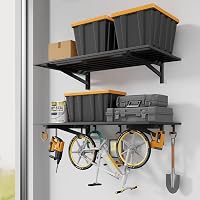
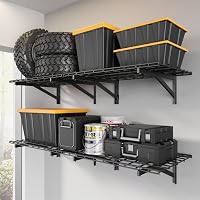
First, distinguish a wall-mounted shelf from a freestanding rack with an anti-tip restraint. The first relies on its wall connections to carry stored weight; the second stands on the floor and uses its restraint as directed to limit tipping.
For wood framing, check the required fastener diameter, length, and stud engagement. Wall covering and bracket thickness use part of the fastener’s length, so total screw length alone doesn't tell you how much reaches the stud.
For hollow drywall, check the permitted wall thickness and space behind it. Toggle wings need room to open, and an anchor must fit the bracket hole without an improvised change to the shelf.
For masonry, identify whether you're fastening into concrete, solid brick, or hollow block. Use hardware approved for that material, including its drilling, hole-cleaning, and spacing requirements.
Don't choose by bolt diameter alone or add several anchor capacities together to estimate a safe shelf load. The complete connection depends on the wall, bracket, fasteners, and direction of force.
Which tools and anchors suit your project?
The JAXWQ scanner helps plan a connection to framing, while the KURUI kit suits selected light hollow-wall shelving projects. Neither takes the place of the shelf manufacturer’s attachment instructions.
Wood and Metal Stud Finder: for locating framing
Choose this tool if you need help finding framing behind a finished wall. It has stud, deep, and metal scan modes, plus a backlit LCD and audio alerts.
Scan from both directions and mark repeatable edges before locating the center, following the scanner’s instructions. JAXWQ also describes live AC wire and pipe detection, but a missed signal doesn't confirm a clear drilling path.
Skip this purchase if suitable framing is already exposed and you don't need help locating it. If readings conflict or the wall contains an unclear obstruction, resolve that uncertainty before drilling.
KURUI garage shelving anchors: for light hollow-wall work
Choose the KURUI Toggle Bolt Anchor Kit for a light shelving job only when both the shelf and anchor instructions permit a hollow-wall connection. Its butterfly wings spread behind the wall to create a wider contact area.
The kit includes 1/8 in, 3/16 in, and 1/4 in sizes made from steel with a galvanized coating. Choose the size required for the application, with enough clearance for the wings and the correct fit through the bracket.
Skip it for a required stud connection or a heavy mount. KURUI also excludes heavy ceiling installations, so this kit isn't a choice for an overhead garage storage rack.
Can you anchor a freestanding shelf to drywall?
Use a drywall connection only when the shelf’s restraint instructions and the anchor’s intended use allow it. Approval for hanging light shelving doesn't automatically cover the forces from a tipping freestanding rack.
The frame’s attachment point matters as much as the anchor. Don't attach a strap to thin shelf decking or drill new frame holes unless the shelf manufacturer permits that method.
Damaged, soft, or crumbling drywall needs attention before an anchor goes in. A larger toggle doesn't repair weak wall material.
If the required attachment points don't line up with suitable framing, ask about an approved mounting board, bracket, or alternate position. Moving the unit may solve the problem without changing its restraint system.
How should you install the shelf connection?
Assemble and position the shelf first, then complete its required restraint before adding storage. Use the designated attachment points and follow the instructions for both the shelf and fasteners.
- Read both sets of instructions. Confirm the wall material, fastener requirements, and whether any included hardware suits your wall.
- Position the empty shelf. Check access, door movement, and the gap caused by baseboards before marking holes.
- Check the floor and frame. Follow the manufacturer’s method for leveling and confirm all feet are supported.
- Locate the attachment points. Mark the required positions and investigate possible wires, pipes, or other obstructions before drilling.
- Install the fasteners as directed. Use the specified hole diameter, depth, and tightening method without crushing the wall covering.
- Inspect before loading. Check that brackets sit correctly, connections are secure, and assembly locks or pins are fully engaged.
A wall restraint shouldn't pull a leaning frame into position or lift its feet off the floor. Correct the placement or leveling issue first.
For more mounting detail, read how to hang garage shelves. Our comparison of wall-mounted vs freestanding garage shelving explains how their support needs differ.
Does a heavy-duty rack still need anchoring?
A high load claim doesn't answer whether a rack needs anchoring. Check the unit’s installation requirements separately from its shelf capacity.
The CCIOBTE 79-Inch 4-Tier Shelving suits readers planning a broad storage area for bulky goods. It measures 79 in wide, 24 in deep, and 73 in high, with adjustable shelves, lateral stabilizers, and diagonal braces.
CCIOBTE states capacities of up to 1,500 lb per shelf and 6,000 lb total. Follow its loading conditions and verify that the floor can support the planned storage; those figures don't specify a suitable wall restraint.
Choose it if you need a wide rack and can leave room to load it. Skip it for a narrow bay or tight parking space, and check garage shelving dimensions before committing floor space.
Its locking pins secure shelf positions, and its powder-coated metal surface can be wiped with a damp cloth. Confirm the required anchoring method before buying separate hardware for it.
What mistakes should you avoid after installation?
Keep loads within the shelf’s limits, and inspect the restraint when storage or placement changes. Anchoring doesn't make climbing, uneven loading, or pulling on the frame safe.
Avoid these common mistakes:
- Putting the heaviest bins at the top. Keep them lower when allowed, and arrange frequent-use items within easy reach.
- Letting bins overhang. Protruding storage is easier to catch or bump while walking past.
- Dragging the rack while attached. Unload it and follow the instructions for moving and reconnecting it.
- Overtightening loose hardware. A spinning anchor or damaged wall needs repair, not more force.
- Reusing disturbed anchors without checking. Follow the fastener manufacturer’s guidance after removal or repositioning.
Look for loose brackets, bent frame parts, wall cracks, corrosion, or movement around the connection. Check again after a bump, a move, or a major change in stored items.
Keep hardware dry and address moisture near the wall or floor. If the frame leans or the attachment shifts, unload the affected unit safely and correct the cause before using it again.
Which garage shelving anchors should you choose?
Choose garage shelving anchors after you identify the wall and the shelf’s required connection. If either is unknown, don't buy a mixed hardware kit and hope one piece fits.
Choose the KURUI kit for permitted light hollow-wall work. Choose the JAXWQ scanner when you need help locating framing, then select the actual fasteners from the shelf’s instructions.
Consider the CCIOBTE rack if you're also replacing your storage and have room for its footprint. Confirm its restraint requirements separately, since buying a new rack doesn't settle the anchoring question.
For a shelf with unclear instructions or no suitable attachment method, contact the manufacturer or a qualified installer before loading it. If you're still choosing the storage system, use our garage shelving buying guide to compare the space, support, and access each layout needs.
Frequently asked questions
Do freestanding garage shelves need to be anchored?
Freestanding garage shelves need anchoring when their instructions require it. A tall or narrow unit, uneven loading, or a location where people could pull on the frame also calls for closer attention; if the manual gives no suitable restraint method, ask the shelf manufacturer before using it.
Should garage shelving be anchored into studs?
Use studs when the shelf manufacturer requires a connection to wood framing. Choose fasteners with the specified diameter and enough engagement in the stud after passing through the bracket and wall covering; a hollow-wall anchor cannot substitute for a required stud connection.
Can toggle bolts hold garage shelves?
Toggle bolts can suit selected light shelving on suitable hollow walls. Check the shelf instructions, wall thickness, wall condition, and anchor guidance together; permission to hang a light shelf doesn't guarantee suitability for restraining a heavy freestanding rack, and toggle bolts cannot replace a required stud connection.
Does anchoring increase a shelf’s weight capacity?
Anchoring doesn't increase a shelf’s stated weight capacity. An anti-tip connection helps restrain movement of the frame, while the shelves and their supports carry stored items; follow both the loading limits and attachment instructions, and keep heavier items low when the manufacturer’s guidance allows it.