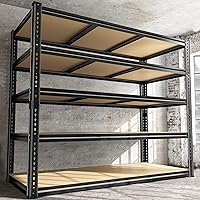
What Size Garage Shelving Do You Need?
Choose garage shelving dimensions that support your largest items while leaving room for parking, doors, and safe access. Check the frame's outside size, usable shelf space, and clearance to lift items out.
On this page (9 sections)
- How do you measure for garage shelving?
- How deep should garage shelves be?
- How wide should a garage shelf be?
- How tall should garage shelving be?
- How much space should you leave around garage shelves?
- How do you choose shelf spacing?
- What dimensions fit common garage items?
- How should you set up and care for garage shelves?
- Which garage shelving dimensions should you choose?
Choose garage shelving dimensions by matching your largest stored items to the space left after parking, opening doors, and walking through the garage. Check both the frame's outside size and the usable space between its posts.
A shelf can fit against a wall yet still be awkward to use. Plan where you'll stand, how you'll grip a full bin, and where it will go when you pull it out.
How do you measure for garage shelving?
Measure width, depth, and height at the installation spot, then check the route you'll use to carry items there. Use the tightest measurement when trim, pipes, or an uneven wall reduces the space.
Mark the frame's planned footprint with painter's tape. Park your car normally, open its doors, and carry your largest empty tote through the remaining gap.
Measure baseboards and anything else that holds the frame away from the wall. That small offset adds to how far the shelves project into the garage.
Check the delivery and assembly route too. Building a unit in place may avoid doorway problems, but you'll still need room to lay out parts and join the frame.
Our guide to choosing garage shelving connects these fit checks with load capacity and anchoring.
Would a laser measure help with garage shelving dimensions?
A laser measure helps with long wall spans and overhead measurements, especially when you're working alone. A tape measure is still useful for tote handles, shelf openings, and short gaps.
The RockSeed Laser Measure offers feet, inches, and meters, a backlit display, and 20 groups of measurement memory. Those features suit someone comparing several possible shelf locations.
Skip this extra tool if you're fitting one small unit and already have a suitable tape measure. For tight fits, confirm the tool's measurement reference point and double-check the opening with a tape.
How deep should garage shelves be?
Choose depth so each item's base rests fully on the shelf without blocking the aisle. Extra depth helps with large totes, but it can put small supplies out of easy reach.
Measure bins at their widest points, including lids and handles. A bin's base may fit while its upper rim hits the wall or the bin beside it.
Avoid planning 2 rows of everyday supplies unless you can reach the rear row easily. Deep shelves work better for large items than for small containers hidden behind one another.
See how deep garage shelves should be for more help matching depth to storage. If most of your space holds containers, our garage shelves for totes guide can help you plan the layout.
How wide should a garage shelf be?
Choose width by checking how many items fit between the posts, rather than using the outside frame measurement alone. Supports can stop bins from fitting across a shelf even when their combined widths seem right.
For example, 3 bins that each measure 16 inches across need 48 inches before allowing any gaps. They won't fit comfortably inside a frame whose entire outside width is 48 inches.
Measure the full run if you're placing units side by side. Each frame adds its own posts, so several narrow units don't provide the same uninterrupted shelf space as one wide unit.
The VEVOR 5-Tier Shelving 48x18x72 suits smaller bins and garages where aisle space matters. It is 18 inches deep and 72 inches tall, with adjustable levels and a carbon steel frame with MDF boards.
Confirm its outside width with VEVOR before ordering: its dimensions conflict between 36 and 48 inches. Skip it if your layout depends on a precise width that you can't confirm.
VEVOR states a capacity of 400 lb per shelf and 2,000 lb total for both shelving units in this guide. Follow each unit's loading instructions, and read how much weight garage shelves can hold before planning dense tool or supply storage.
How tall should garage shelving be?
Choose height around overhead clearance and your reach, including the items that will sit on the top level. The frame's height is only part of the space you'll need.
Check the garage door through its full travel. Tracks, door sections, and opener parts can pass through space that looks clear when the door is closed.
Leave room to lift a tote over a shelf edge without striking anything above it. Our garage door clearance guide explains what to check around the moving door.
The VEVOR 5-Tier Shelving 60x24x78 measures 60 inches wide, 24 inches deep, and 78 inches tall. Its adjustable levels suit bulky supplies when both the wall and floor space allow a larger frame.
Choose it for items that need the extra depth; skip it if that footprint crowds parking or puts daily supplies beyond easy reach. It has a powder-coated carbon steel frame and includes 2 anti-tipping brackets.
How much space should you leave around garage shelves?
Leave room for the activity beside the shelf, including opening doors and carrying loaded containers. A gap wide enough to walk through may still be too narrow for a bulky tote.
Check access to appliances, switches, outlets, and equipment. Keep electrical-panel working space clear and follow any required clearances around heaters.
Account for handles or stored items that project beyond the shelf. Don't rely on squeezing sideways past a frame while carrying something heavy.
Follow the unit's installation instructions for wall restraint. Our guide to anchoring garage shelving to a wall explains why freestanding shelves may still need securing.
How do you choose shelf spacing?
Set clear openings around the items assigned to each level, rather than dividing the frame into equal gaps. Measure from the shelf surface to the underside of the structure above.
Group items by height before assembly. Low levels can hold short containers, while one taller opening can hold an awkward tool or large bin.
Allow room for your fingers around handles and for any upward movement needed during removal. A container that slides into a gap may still be hard to grip once it's full.
Both VEVOR units have adjustable shelves and can split into 2 racks. Follow their assembly instructions for allowed layouts rather than omitting supports to create a larger opening.
What dimensions fit common garage items?
Use your actual items, since labels such as “large tote” don't define a reliable size. Measure the biggest example in each group and note its weight.
- Small parts boxes and cans: Favor easy reach and visibility over unused depth.
- Totes: Include lids and handles, then check how many fit across a clear shelf opening.
- Toolboxes: Allow room to grip both handles without catching the frame.
- Long tools: Keep ends inside the storage area rather than projecting into a walkway.
- Large equipment: Check whether you can lift it safely onto the planned level.
Put heavy items low and light, rarely used items higher. If a large object is awkward to lift from the floor, adding shelf space won't make it easier to handle.
How should you set up and care for garage shelves?
Assemble on a sound, level surface, secure the unit as directed, and check each connection before loading it. Don't use stored weight to force a loose frame into shape.
The VEVOR units use press-fit assembly and include a rubber hammer and gloves. Seat the joints as instructed, then add weight gradually while keeping each level within its limit.
Keep damp containers off MDF boards and wipe up spills promptly. Check steel parts for coating damage or rust, and inspect supports and wall restraints after moving or adjusting the unit.
Common mistakes include loading one side heavily, climbing the frame, and changing shelf positions while they're loaded. Empty the affected levels before making adjustments.
Which garage shelving dimensions should you choose?
Choose garage shelving dimensions that work with your daily routine, then buy the smallest footprint that holds your planned items comfortably. Tape out the final size and repeat the parking and tote-removal checks before ordering.
Choose the smaller VEVOR for compact storage once its width is confirmed. Choose the larger VEVOR when bulky items need more shelf area and the garage can spare the floor space.
Use the RockSeed for measuring several locations or long spans; keep a tape measure for close fit checks. For the next decision, use our garage shelving buying guide to compare shelf types and load needs.
Frequently asked questions
What is a standard size for garage shelving?
Garage shelving has no single standard size; compare outside frame dimensions with usable shelf space, since posts and supports reduce the room available for bins. Start with your largest items, then check wall space, parking clearance, and overhead obstacles before choosing a unit.
Is 18 inches deep enough for garage shelves?
An 18-inch shelf suits items whose full base fits within its usable depth; measure tote lids and handles too, since they can prevent bins from fitting side by side. Choose deeper shelves for larger items only if the extra depth leaves room for car doors and a clear walkway.
How tall should garage shelves be?
Choose a height that clears overhead obstacles and keeps everyday storage within comfortable reach; check the garage door throughout its travel, not just when closed. Include the height of items on the top shelf and the space needed to lift them away from tracks, lights, and the ceiling.
How much space should be between garage shelves?
Leave enough clear space for the tallest item on each level plus the movement needed to remove it; a tote with a lid may need extra lifting room, while an open bin needs room for your hand. Follow the unit's allowed shelf positions rather than assuming every gap is possible.