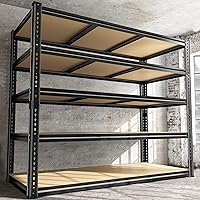
8 Best Garage Shelves on Wheels (November 2026)
The best garage shelving with wheels include the Amazon Basics 5-Shelf Rack With Casters for everyday garage storage, the REIBII 4-Tier Shelving With Wheels for bulky garage bins, and the Amazon Basics 4-Shelf Rack With Wheels for low-clearance storage.
On this page (9 sections)
- Which garage shelves on wheels fit common storage needs?
- How to choose garage shelves on wheels
- Our picks for rolling garage storage
- How do you choose a moving load limit?
- How should you assemble and load a rolling rack?
- When should you choose leveling feet instead of wheels?
- How much room should you leave around a rolling rack?
- How do you keep rolling garage shelves working well?
- Which garage shelves on wheels should you choose?
The Amazon Basics 5-Shelf Rack With Casters is the best choice among garage shelves on wheels for compact, everyday storage because it combines several sorting levels with clear moving-load limits. Choose REIBII for larger containers after confirming movement guidance, or FDW when you need more shelves.
The right rolling rack must fit your contents, its parking spot and the path between them. Its highest weight capacity is often for use on feet, so start with the load you actually intend to move.
For broader comparisons, see our guide to heavy-duty garage shelving, garage shelving units roundup and best wire shelving for a garage.
Our picks at a glance
-
1
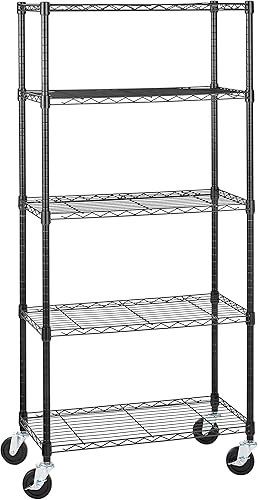 Best for everyday garage storage
Amazon Basics 5-Shelf Rack With Casters
8.5/10 our score
See it on Amazon -
2
-
3
 Best for low-clearance storage
Amazon Basics 4-Shelf Rack With Wheels
8.0/10 our score
See it on Amazon
- 4
 Check it
FDW 6-Tier Shelving With Wheels
Best for sorting smaller supplies - 5
 Check it
RAVIGIN 55-Inch Shelving With Wheels
Best for occasional layout changes - 6
 Check it
Garvee 4-Tier Shelving With Wheels
Best for bulky lightweight gear - 7
 Check it
PrimeZone 4-Tier Wire Shelving With Wheels
Best for shared utility storage - 8
 Check it
Garvee 63-Inch 4-Tier Shelving With Wheels
Best for medium-size storage bays
Which garage shelves on wheels fit common storage needs?
Choose compact shelves for frequent access, deep shelves for large containers and extra tiers for sorting smaller supplies. A larger rack helps only when you can reach its contents and move it through your garage.
Amazon Basics 5-Shelf Rack With Casters: Best for everyday garage storage
- 5 adjustable wire shelves
- 30 x 14 x 64.75 in
- 88 lb per shelf while moving
- 4 in casters
A compact rack for sorting small boxes, tools and cleaning supplies, with separate per-shelf and total moving limits.
Pros
- Clear moving-load limits
- 5 levels for sorting supplies
- Includes leveling feet
Cons
- Shallow shelves limit bulky-bin choices
- Lower capacity while moving
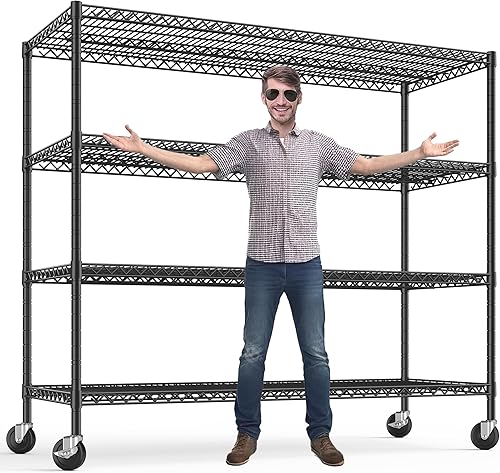
REIBII 4-Tier Shelving With Wheels: Best for bulky garage bins
- 55.52 in wide and 24.02 in deep
- 780 lb total on wheels
- 2 lockable casters
- Separates into 2 sections
Deep, broad shelves suit larger containers and equipment. Confirm the allowed load during movement before using it as a loaded rolling rack.
Pros
- Deep shelves for larger containers
- Can separate into 2 sections
- Includes locking casters and leveling feet
Cons
- Needs a broad parking and turning area
- Separate moving limit needs confirmation
Amazon Basics 4-Shelf Rack With Wheels: Best for low-clearance storage
- 36 x 14 x 57.75 in
- 88 lb per shelf while moving
- 4 adjustable shelves
- 3 in casters
The lowest rack here suits spaces where taller shelving would meet an overhead obstruction, while shallow shelves preserve aisle room.
Pros
- Lowest frame in this group
- Clear moving-load limits
- Includes leveling feet
Cons
- Only 4 storage levels
- Limited depth for large containers
FDW 6-Tier Shelving With Wheels: Best for sorting smaller supplies
- 6 adjustable wire shelves
- 82 in tall and 18 in deep
- 510 lb total with caster wheels
- Leveling feet included
The extra storage level helps separate categories of supplies. Confirm its width and loaded movement guidance, and measure every overhead obstruction.
Pros
- Most shelves in this group
- Adjustable spacing
- Includes leveling feet
Cons
- Tall frame complicates clearance
- Exact width and moving limit need confirmation
RAVIGIN 55-Inch Shelving With Wheels: Best for occasional layout changes
- About 55 in wide and 24 in deep
- 76 in tall
- 4 lockable casters
- Adjustable shelves
Broad metal shelves and 4 locking casters suit a roomy storage area that you occasionally rearrange. Get clear capacity guidance before loading or moving it.
Pros
- Broad shelves for larger items
- All 4 casters lock
- Reinforcing ribs and diagonal braces
Cons
- Conflicting capacity figures need clarification
- Large footprint
Garvee 4-Tier Shelving With Wheels: Best for bulky lightweight gear
- About 59 in wide and 23.9 in deep
- About 73.8 in tall
- Brakes on 2 wheels
- 220 lb total while moving
Extra-wide shelves suit large containers filled with lighter gear. Its clear moving limit matters more than its much higher stationary capacity.
Pros
- Wide shelves for bulky storage
- Separate moving and parked limits
- Includes brakes and leveling feet
Cons
- Moving limit is lower than either Amazon Basics pick
- Needs generous turning room
PrimeZone 4-Tier Wire Shelving With Wheels: Best for shared utility storage
- 55.5 x 24 x 80 in
- 4 hooks
- 2 lockable wheels
- 800 lb recommended maximum on wheels
Broad shelves and side hooks suit a shared storage station for containers, towels and bags. Allow room for hanging items as well as the frame.
Pros
- 4 hooks for hanging items
- Adjustable shelves
- Includes locking wheels and leveling feet
Cons
- Tall frame needs overhead clearance
- Separate moving limit needs confirmation
Garvee 63-Inch 4-Tier Shelving With Wheels: Best for medium-size storage bays
- About 47.2 x 17.7 x 63 in
- 4 in casters with 2 brakes
- 4 adjustable shelves
- Leveling feet included
A middle-size option for garages that cannot spare the depth of a larger rack. Confirm caster capacity before planning loaded movement.
Pros
- Less depth than the broadest racks
- Lower frame than most alternatives
- Includes brakes and leveling feet
Cons
- Moving capacity needs confirmation
- Fewer sorting levels than the taller picks
CordialCue compared dimensions, shelf layouts, caster features and capacity guidance, with particular attention to the difference between parked and moving loads.
| Product | Best for | Size (W x D x H) | Moving load | Shelves | Our score |
|---|---|---|---|---|---|
| Amazon Basics 5-Shelf Rack With Casters | everyday garage storage | 30 x 14 x 64.75 in | 88 lb per shelf, 441 lb overall | 5 adjustable wire shelves | 8.5 |
| REIBII 4-Tier Shelving With Wheels | bulky garage bins | 55.52 x 24.02 x 75.62 in | 4 adjustable tiers | 8.3 | |
| Amazon Basics 4-Shelf Rack With Wheels | low-clearance storage | 36 x 14 x 57.75 in | 88 lb per shelf, 353 lb overall | 4 adjustable wire shelves | 8.0 |
| FDW 6-Tier Shelving With Wheels | sorting smaller supplies | 6 adjustable tiers | 7.9 | ||
| RAVIGIN 55-Inch Shelving With Wheels | occasional layout changes | About 55 x 24 x 76 in | Confirm with RAVIGIN | 4 adjustable shelves | 7.4 |
| Garvee 4-Tier Shelving With Wheels | bulky lightweight gear | About 59 x 23.9 x 73.8 in | 220 lb total | 4 adjustable tiers | 7.2 |
| PrimeZone 4-Tier Wire Shelving With Wheels | shared utility storage | 55.5 x 24 x 80 in | 4 adjustable wire shelves | 7.2 | |
| Garvee 63-Inch 4-Tier Shelving With Wheels | medium-size storage bays | About 47.2 x 17.7 x 63 in | Confirm with Garvee | 4 adjustable wire shelves | 7.1 |
How to choose garage shelves on wheels
Start with your heaviest load and narrowest passage, then choose the shelf layout. This avoids buying a rack that stores everything but cannot leave its parking spot.
Which load limit applies to garage shelves on wheels?
Use the moving-load limit for loaded travel, the parked caster limit while stationary on wheels and the feet limit only with leveling feet installed. These limits describe different setups.
Check both the per-shelf allowance and the total allowance where both are given. A rack can remain below its total limit while one shelf carries too much.
Weigh heavy containers instead of guessing from their size. A small bin of hardware can weigh more than a large box of camping gear, and the contents may change over time.
A wheel-use capacity without separate movement guidance needs clarification before loaded travel. Don't turn a whole-rack figure into a per-shelf allowance by dividing it equally.
How should you measure the parking spot and travel route?
Measure the full assembled rack and every obstruction, including door tracks, shelves above it and nearby vehicle doors. Leave enough room to reach the brakes and handle the frame.
Map the route with the car parked where it normally sits. A clear garage with the car outside can give a false sense of how much room you have.
Check width and depth through turns, not just straight doorways. A rack may pass through an opening sideways yet lack the space needed to turn into the next aisle.
Use tape on the floor to outline its footprint and turning area. For detailed planning, our garage shelving dimensions guide explains how to match a unit to its space.
What shelf depth works for bins and loose tools?
Choose the shallowest shelf that fully supports your containers. Extra depth takes aisle space and can hide small items behind larger ones.
Measure bins at their widest point, including handles and lid rims. Also check usable shelf space between posts, since the outside rack dimensions don't describe every opening.
For small tools and hardware, use shallow trays or labeled bins that span the wire openings. A shelf liner can help contain small objects, but it does not increase capacity or make a heavy point load acceptable.
When do wheels stop being useful?
Wheels lose their benefit when the route is rough, sloped or too tight, or when the contents exceed the permitted moving load. In those cases, stationary shelving may serve you better.
A larger caster can help with small floor irregularities, but wheel diameter alone doesn't guarantee suitability for cracks or thresholds. Follow the movement instructions for the rack.
For storage that stays put, compare these racks with our guide to heavy-duty garage shelving units. Before moving heavy contents, read how much weight garage shelves can really hold.
Our picks for rolling garage storage
The Amazon Basics 5-Shelf Rack With Casters offers the clearest starting point for compact storage. Choose an alternative when container size, overhead clearance or the number of storage levels changes your needs.
Amazon Basics 5-Shelf Rack With Casters: Best for everyday garage storage
- 5 adjustable wire shelves
- 30 x 14 x 64.75 in
- 88 lb per shelf while moving
- 4 in casters
A compact rack for sorting small boxes, tools and cleaning supplies, with separate per-shelf and total moving limits.
Pros
- Clear moving-load limits
- 5 levels for sorting supplies
- Includes leveling feet
Cons
- Shallow shelves limit bulky-bin choices
- Lower capacity while moving
The 30 x 14 in footprint suits a narrow utility area beside other garage storage. Its 5 shelves help separate cleaning supplies, hand tools and small boxes without stacking everything into one deep pile.
Shelf heights adjust in 1 in steps, so plan openings around your containers before assembly. Leave room above each bin to grip it rather than packing the shelves as closely as possible.
The moving limits are 88 lb per shelf and 441 lb overall, with evenly distributed weight. The rack includes 4 in casters and leveling feet, allowing a different setup if you later decide to keep it stationary.
Choose this for supplies you want organized and accessible on several levels. Skip it for deep totes or large equipment that would overhang the shallow shelves.
For a useful layout, put heavier tools low and light refill supplies above. Keep frequently used items near the front so routine access doesn't require moving the entire rack.
REIBII 4-Tier Shelving With Wheels: Best for bulky garage bins
- 55.52 in wide and 24.02 in deep
- 780 lb total on wheels
- 2 lockable casters
- Separates into 2 sections
Deep, broad shelves suit larger containers and equipment. Confirm the allowed load during movement before using it as a loaded rolling rack.
Pros
- Deep shelves for larger containers
- Can separate into 2 sections
- Includes locking casters and leveling feet
Cons
- Needs a broad parking and turning area
- Separate moving limit needs confirmation
The REIBII 4-Tier Shelving With Wheels suits large bins and bulky equipment that need more shelf area. Its 55.52 x 24.02 in footprint provides substantially more depth than the compact Amazon Basics racks.
Adjustable shelf spacing lets you prioritize tall containers instead of creating several short openings. The unit can also separate into 2 sections, though any alternate arrangement should follow REIBII's assembly instructions.
Its total capacity on wheels is 780 lb, without a separate moving allowance. It includes 3 in casters, 2 of which lock, plus adjustable leveling feet.
Choose REIBII for a broad storage bay where deep containers can sit fully supported. Skip it for a narrow aisle or frequent loaded trips unless you have clear movement guidance.
Use labels facing the access side so you don't have to pull out several similar bins. Avoid filling the front with small loose items that block the larger containers behind them.
Amazon Basics 4-Shelf Rack With Wheels: Best for low-clearance storage
- 36 x 14 x 57.75 in
- 88 lb per shelf while moving
- 4 adjustable shelves
- 3 in casters
The lowest rack here suits spaces where taller shelving would meet an overhead obstruction, while shallow shelves preserve aisle room.
Pros
- Lowest frame in this group
- Clear moving-load limits
- Includes leveling feet
Cons
- Only 4 storage levels
- Limited depth for large containers
The Amazon Basics 4-Shelf Rack With Wheels is the best fit here for a lower overhead space. At about 57.75 in tall, it is the lowest frame in this group.
Its 36 x 14 in footprint gives you more side-to-side room than the top pick while keeping the same shallow depth. Four adjustable shelves suit a smaller set of categories or containers that need taller openings.
The rack has 3 in casters and moving limits of 88 lb per shelf and 353 lb overall, based on evenly distributed weight. Leveling feet are included for stationary use.
Choose it when height is the main constraint, or when a shallower rack preserves a useful walkway. Skip it if you need deep bins or a fifth storage level.
Measure the contents as well as the frame when checking clearance. A tall item on the top shelf can defeat the reason you chose a shorter unit, especially beneath a door track.
FDW 6-Tier Shelving With Wheels: Best for sorting smaller supplies
- 6 adjustable wire shelves
- 82 in tall and 18 in deep
- 510 lb total with caster wheels
- Leveling feet included
The extra storage level helps separate categories of supplies. Confirm its width and loaded movement guidance, and measure every overhead obstruction.
Pros
- Most shelves in this group
- Adjustable spacing
- Includes leveling feet
Cons
- Tall frame complicates clearance
- Exact width and moving limit need confirmation
The FDW 6-Tier Shelving With Wheels suits people who want separate levels for several groups of smaller supplies. Its 6 adjustable shelves can reduce the need to stack containers on top of each other.
The frame is 82 in tall and 18 in deep, making overhead clearance a deciding factor. Keep light, infrequently used contents at the top rather than treating the highest shelf as another place for dense tools.
FDW gives a 510 lb total caster capacity, without a separate moving limit. Width figures differ between 45 and 48 in, so confirm the exact assembled width before ordering for a tight space.
Choose it for vertical sorting when the room and route can accommodate a tall rack. Skip it beneath low obstructions or if reaching the upper storage would be awkward.
Six shelves also mean more decisions about spacing. Lay out your containers first so the extra tier doesn't leave several openings too short to use.
RAVIGIN 55-Inch Shelving With Wheels: Best for occasional layout changes
- About 55 in wide and 24 in deep
- 76 in tall
- 4 lockable casters
- Adjustable shelves
Broad metal shelves and 4 locking casters suit a roomy storage area that you occasionally rearrange. Get clear capacity guidance before loading or moving it.
Pros
- Broad shelves for larger items
- All 4 casters lock
- Reinforcing ribs and diagonal braces
Cons
- Conflicting capacity figures need clarification
- Large footprint
The RAVIGIN 55-Inch Shelving With Wheels suits a roomy storage area that you occasionally rearrange. Its broad metal shelves offer room for large containers, and all 4 casters lock when parked.
The frame measures about 55 x 24 x 76 in, with 4 adjustable shelves. Reinforcing ribs, diagonal braces and shelf locking pins are part of its construction.
RAVIGIN's capacity figures conflict, and a separate moving limit is unclear. Get a clear load limit for your intended setup before choosing it for heavy storage or loaded movement.
Choose it if its shelf layout and all-wheel locks match your needs and the capacity question is resolved. Skip it if you need a clear loaded-movement allowance before buying.
When planning the storage layout, leave the brake controls reachable. A broad shelf packed to its edges can make it awkward to reach around the rack, especially if it sits between other units.
Garvee 4-Tier Shelving With Wheels: Best for bulky lightweight gear
- About 59 in wide and 23.9 in deep
- About 73.8 in tall
- Brakes on 2 wheels
- 220 lb total while moving
Extra-wide shelves suit large containers filled with lighter gear. Its clear moving limit matters more than its much higher stationary capacity.
Pros
- Wide shelves for bulky storage
- Separate moving and parked limits
- Includes brakes and leveling feet
Cons
- Moving limit is lower than either Amazon Basics pick
- Needs generous turning room
The Garvee 4-Tier Shelving With Wheels suits large containers filled with relatively light contents. Its roughly 59 x 23.9 in footprint offers the most width among the options with consistent width measurements here.
Garvee separates its limits clearly: 220 lb while moving, 880 lb with braked casters and 2,640 lb on leveling feet. That sharp difference makes it a poor choice for rolling dense supplies simply because they fit on the shelves.
The 4 shelves adjust, and brakes are fitted to 2 wheels. Its broad frame needs a clear turning area as well as a large parking spot.
Choose it for bulky, lighter gear when the total moving load stays within the lower allowance. Skip it for loaded trips with heavy toolboxes or hardware bins.
If you store a heavier parked load, unload enough before movement. Keep an inventory of container weights so a later addition doesn't quietly turn an acceptable rolling load into an excessive one.
PrimeZone 4-Tier Wire Shelving With Wheels: Best for shared utility storage
- 55.5 x 24 x 80 in
- 4 hooks
- 2 lockable wheels
- 800 lb recommended maximum on wheels
Broad shelves and side hooks suit a shared storage station for containers, towels and bags. Allow room for hanging items as well as the frame.
Pros
- 4 hooks for hanging items
- Adjustable shelves
- Includes locking wheels and leveling feet
Cons
- Tall frame needs overhead clearance
- Separate moving limit needs confirmation
The PrimeZone 4-Tier Wire Shelving With Wheels suits a shared utility station where shelves and hanging space both help. Its 4 side hooks can hold items such as towels or bags without using shelf area.
The frame measures 55.5 x 24 x 80 in, so check overhead space and allow extra side clearance for hanging contents. Hooks should not project into a walkway or catch nearby storage during movement.
PrimeZone recommends no more than 800 lb total on wheels, without separating parked and moving use. It includes 4 in wheels, 2 wheel locks and adjustable leveling feet.
Choose it when the broad shelves and hooks solve a clear storage need. Skip it for a low space, a tight route or frequent loaded movement without further guidance.
Keep hanging items clear of the casters and brake levers. Remove anything that could swing or snag before moving the unit, and follow PrimeZone's instructions for wheel placement.
Garvee 63-Inch 4-Tier Shelving With Wheels: Best for medium-size storage bays
- About 47.2 x 17.7 x 63 in
- 4 in casters with 2 brakes
- 4 adjustable shelves
- Leveling feet included
A middle-size option for garages that cannot spare the depth of a larger rack. Confirm caster capacity before planning loaded movement.
Pros
- Less depth than the broadest racks
- Lower frame than most alternatives
- Includes brakes and leveling feet
Cons
- Moving capacity needs confirmation
- Fewer sorting levels than the taller picks
The Garvee 63-Inch 4-Tier Shelving With Wheels fits between the compact racks and the broad, deep alternatives. Its roughly 47.2 x 17.7 x 63 in size suits a medium-size storage bay where a deeper frame would crowd the aisle.
Four adjustable wire shelves let you divide the space around bins and tools. The rack includes 4 in swivel casters with brakes on 2 wheels, plus leveling feet for stationary use.
Its moving capacity needs confirmation with Garvee. The large weight figures attached to the rack should not guide loaded travel without a clear caster allowance.
Choose it when its middle-size footprint fits your containers better than either extreme. Skip it if your main goal is moving heavy contents and you need a known allowance before buying.
Place your largest container in the planned shelf outline before committing. A moderate depth can preserve floor room, but that benefit disappears if bin handles or lids extend into the walkway.
How do you choose a moving load limit?
Choose a rack whose allowed moving load covers everything aboard, with room in your plan for supplies you regularly add. Both individual shelf limits and the total limit still apply.
Make a short inventory of loaded containers and weigh the dense ones. Include trays and shelf liners in your contents total instead of counting only the tools inside them.
Put heavy items low and spread their weight across the shelf. Several dense objects grouped in the center create a different load from evenly spaced containers.
Compare capacities for the same setup rather than ranking racks by their largest number. Our garage shelf weight-limit guide explains capacity and load placement.
If a rack holds more when parked than when moving, decide how you'll unload it before travel. A rack that needs a major unloading job every week may be the wrong choice for your routine.
How should you assemble and load a rolling rack?
Plan shelf spacing before assembly, then check the completed frame before adding contents. Tool-free assembly still requires the clips, shelves and casters to be fitted correctly.
Lay out the parts and follow the instructions in order. For clip-supported shelves, make sure supports are at matching heights and fully seated rather than correcting a crooked shelf after loading.
Install brakes where the instructions direct and where you can reach them. Check that all wheels contact the floor and turn freely, then move the empty rack through its planned route.
Load from the bottom upward, placing heavier contents low. Leave the top for light items, and keep everything inside the shelf edges where it cannot catch a car or wall.
Photograph or note a layout that works before changing shelf positions. Empty the affected area and follow the disassembly instructions instead of adjusting supports beneath stored contents.
When should you choose leveling feet instead of wheels?
Use leveling feet for storage that rarely moves, particularly when you need the rack's stationary capacity. Use the load limit and setup instructions for feet.
Adjustable feet can help a stationary rack sit level on an uneven floor. They don't turn a badly sloped area into a suitable storage location.
If movement is only for occasional cleaning, unloading first may make the job more practical. Don't try to exchange feet and casters while the rack is loaded.
Also consider how the unit must be secured in its final position. Our guide to anchoring garage shelving explains why stability planning matters beyond fitting wheel brakes.
How much room should you leave around a rolling rack?
Leave enough space to move and stop the whole rack, with room for your hands and access to the brakes. There is no single clearance that suits every garage layout.
Keep the travel route free of cords, loose hardware and other debris. Check floor joints and thresholds before movement rather than discovering them beneath a loaded caster.
Move slowly using the frame where the instructions direct. Avoid pulling from the top, making sharp turns or trying to force a wheel over an obstruction.
If a wheel catches, stop and address the obstruction or unload as needed. Extra force can shift the contents and make a tall rack harder to control.
Keep people clear of the route, and never use the shelves as steps. Brakes help park a unit but do not make climbing safe.
How do you keep rolling garage shelves working well?
Keep the casters clean, the frame secure and the contents balanced. A brief check after a move can catch a loose fitting or shifted container before the next trip.
Remove hair, string and debris from wheel axles. Check that brakes engage and release as intended, and follow the brand's care directions before adding any lubricant.
Wipe up spills promptly and dry damp surfaces. A rust-resistant finish still benefits from care, especially where scratches expose metal.
Recheck shelf supports, caster attachments and other fasteners at the intervals in the instructions. If a wheel binds, a shelf bends or the frame leans, unload the affected rack and resolve the cause before further use.
The common mistakes are simple: loading by the feet capacity, parking on a slope, blocking the brakes and placing dense contents high. Avoiding those errors matters more than adding another shelf.
Which garage shelves on wheels should you choose?
Choose the rack that fits your routine load and route, then use shelf count to break a close decision. Buy for the contents you expect to move, including any regular additions.
Pick the Amazon Basics 5-Shelf Rack With Casters for compact, sorted storage. Choose its shorter 4-shelf counterpart when overhead clearance matters more than an extra level.
Choose REIBII for deep containers after resolving loaded movement guidance, or FDW for more sorting levels after confirming its fit. The extra-wide Garvee suits bulky, lighter loads with a clear movement allowance.
Keep RAVIGIN, PrimeZone and the shorter Garvee on your shortlist when their layouts solve a specific space problem, with capacity questions settled before use. If you cannot move the loaded rack along a clear route, choose stationary storage instead.
For garage shelves on wheels that will mainly hold containers, match the shelf openings to the bins before ordering. See our garage shelves for totes and bins, or compare our best heavy-duty garage shelving for storage that will stay parked.
Our top 3 picks at a glance
-
1
Best for everyday garage storage
Amazon Basics 5-Shelf Rack With Casters
8.5/10 our score
See it on Amazon -
2
-
3
Best for low-clearance storage
Amazon Basics 4-Shelf Rack With Wheels
8.0/10 our score
See it on Amazon
Frequently asked questions
Can you roll garage shelves while they are loaded?
Yes, if the manufacturer allows loaded movement and your contents stay within its moving-load limits. Check both the whole-rack limit and any per-shelf limit.
A parked caster capacity is different, so follow the movement instructions and clear the route before releasing the brakes.
Are garage shelves on wheels as strong as stationary shelves?
Many racks carry less weight on wheels than on leveling feet, with a further reduction during movement. The frame's highest capacity may apply only to a stationary setup.
Choose by the limit for your intended use, and distribute weight across each shelf rather than concentrating it in one spot.
Should garage shelves on wheels have locking casters?
Locking casters are useful for keeping a rack parked during loading and everyday access. They do not increase its moving capacity or make a sloped floor suitable for storage.
Engage the brakes as directed, keep heavy contents low, and choose a level parking area away from vehicle traffic.
How do you choose the right size rolling garage shelf?
Measure the parking spot, your largest containers and the entire travel route before choosing a rack. Include clear doorway openings, turns and overhead obstructions, with extra room for your hands.
Our garage shelving size guide explains the measurements that help prevent an awkward fit.