Wall Mounted vs Freestanding Garage Shelving: Which Is Better? (November 2026)
For wall mounted vs freestanding garage shelving, choose wall shelves to clear the floor when suitable wall support is available. Choose freestanding shelves for adjustable tiers and easier layout changes, allowing space for the frame and any required anchoring.
On this page (8 sections)
- Wall mounted vs freestanding garage shelving: what changes?
- When should you choose wall mounted garage shelves?
- When should you choose freestanding garage shelving?
- Which style gives you more usable storage?
- How should you compare shelf weight limits?
- What should you do during setup?
- How do you care for garage shelves?
- Which style should you choose for your garage?
Choose wall mounted shelving to clear the floor and freestanding shelving for adjustable storage. The wall mounted vs freestanding garage shelving decision starts with suitable wall support, parking clearance and how you handle your stored items.
Wall shelves suit a fixed storage zone above floor equipment. Adjustable floor racks suit changing supplies, mixed-size boxes and containers you want within easy reach.
Neither style solves every garage layout. For materials and broader storage options, start with our complete garage shelving guide.


Wall mounted vs freestanding garage shelving: what changes?
The main difference is where the stored weight goes: wall shelves load the wall structure, while freestanding racks carry weight through their frames to the floor. Both need correct assembly and loading.
Wall shelves remove supporting legs from the space below. They still project into the garage, so floor clearance doesn't guarantee room for a car roof, open hatch or raised hood.
Freestanding racks occupy a fixed footprint from floor level upward. Their frames support the shelves, but wall attachment may still be needed to reduce tipping risk.
Compare the space you can actually use. A shelf that fits against the wall can still fail your layout if a tote won't clear the parked car.
Wall mounted vs freestanding shelves for daily access
Choose easy lifting height for frequent use, regardless of mounting style. A high shelf is better suited to light seasonal goods than a heavy toolbox you retrieve every weekend.
Daily supplies belong where you can see and reach them without shifting other containers. Plan a clear place to stand while pulling a bin forward.
For shared garages, consider the shortest regular user. Storage that requires stretching or climbing on nearby furniture needs a different layout.
When should you choose wall mounted garage shelves?
Choose wall shelves when open floor space has a clear purpose, such as parking, sweeping or storing a mower beneath them. They suit garages with confirmed structural mounting points and a storage layout you expect to keep.
Skip them if the only available attachment is drywall, the wall construction is uncertain or you can't make the required holes. Also skip high mounting positions for dense items you can't comfortably lift.
Before buying, mark the proposed shelf footprint and height with painter's tape. Check vehicle doors, cabinets, windows, outlets and access to utility equipment.
Is your wall suitable for mounting?
A suitable wall must match the shelf's approved mounting method. The Jusgym sets here support wood studs, concrete or brick, and neither is suitable for metal walls.
A masonry surface needs the fastener type, embedment and edge clearances required by the installation instructions. Don't assume hollow block, damaged brick or mortar joints are interchangeable with solid concrete.
If you can't identify a secure mounting method, have a qualified installer assess the location. Our garage shelving anchor guide explains attachment choices, while how to hang garage shelves covers installation planning.
Who should choose the Jusgym 2x3 set?
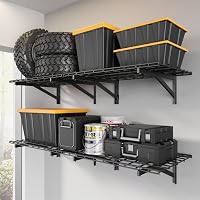
The Jusgym 4-Pack 2x3 Wall Shelves suits buyers who want separate shelf zones for bins and bulky gear. Its integrated steel grid allows airflow, though small loose parts need containers that bridge the openings.
Choose it for storage you can reach safely above equipment or along a parking bay. Skip it if you need a solid surface for small objects or expect to move the shelves often.
The nominal size and published dimensions conflict, so confirm the assembled shelf width and depth with Jusgym before ordering. Lay out mounting positions only after resolving that fit question.
When should you choose freestanding garage shelving?
Choose a freestanding rack when container sizes and storage locations may change. Adjustable tiers let you reclaim space above short boxes or open a taller bay for larger items.
Skip a floor rack if its footprint leaves too little room to park, carry supplies or open vehicle doors. A narrow rack can still cause problems when bins project beyond the shelf edge.
Freestanding also doesn't mean drilling is unnecessary. If you can't meet the unit's anchoring instructions, choose a different system or location.
Who should choose the REIBII set?
The REIBII 2 Pack Garage Shelving suits households that need two storage zones for mixed supplies. Each rack measures 36 W x 16 D x 72 H in and has five adjustable tiers.
You can place the units together or separate them, and each can split into shorter sections. That helps when a tall rack would block a window or interfere with the layout near a workbench.
Its flat MDF shelves support small containers without wire gaps. Choose another shelf material if your storage area regularly gets wet, and don't assume a tote fits just because its gallon size sounds familiar.
Can a freestanding rack go in the center of the garage?
A center position works only if the rack's instructions allow it and all stability requirements can be met. The REIBII set includes wall anchors, so plan suitable attachment rather than assuming it can stand anywhere.
Floor condition matters too. Assemble the rack where its feet can sit firmly, and use only leveling methods allowed by the manufacturer.
Check the route around the loaded rack, not just its empty frame. Projecting handles and boxes can turn an adequate aisle into a tight passage.
Which style gives you more usable storage?
The better system is the one that holds your actual items while leaving room to retrieve them. Count usable shelf positions, rather than comparing only overall height or total shelf area.
Start with your largest container, then measure the smaller items you use most. Include lids, handles and any tapered sections that widen toward the top.
Our garage shelf depth guide explains that fit check. Use the garage shelving dimensions guide to plan the full rack and access space.
Which shelves work better for totes?
Adjustable freestanding shelves suit a changing mix of tote heights. Wall shelves work well for containers assigned a fixed spot, provided each loaded bin is manageable at that height.
Leave enough space above a tote to grip it and clear any shelf lip. If you need to open the lid in place, allow for that movement too.
Keep heavy contents in smaller containers instead of filling the largest bin available. Our garage shelves for totes and bins guide covers matching containers to shelf layouts.
Who should choose the Jusgym hook set?
The Jusgym 4-Pack 16-Hook Wall Shelves suits buyers who need to organize long tools and cords alongside bins. Its four large and twelve small hooks add hanging positions beneath the shelves.
Choose it when the wall zone has room for both stored goods and hanging equipment. Skip it where tool handles would project into a walking path or scrape a vehicle.
Lay your gear on the floor in the intended arrangement before setting shelf height. Leave enough space to lift each item off its hook without striking the shelf or neighboring tools.
Don't assume hanging space is extra load capacity. Confirm how hook loads count toward the system's permitted load before filling both areas.
How should you compare shelf weight limits?
Compare per-shelf limits and their conditions before looking at a whole-system total. Unused capacity on one shelf doesn't allow you to overload another.
Jusgym states up to 350 lb per bracket for the 2x3 set and 1,400 lb across the set. Confirm how the bracket limit applies to the assembled shelves and your intended load.
REIBII states 480 lb per tier with evenly distributed weight, up to 2,400 lb per unit. Those figures don't mean a compact machine can sit at one corner with the same effect as evenly spread boxes.
The hook-equipped Jusgym set has conflicting figures of 200 and 250 lb per shelf. Resolve the applicable limit with Jusgym before buying it for heavy goods.
Our guide to garage shelving weight limits explains distributed loads and total capacity. Keep within every applicable limit, including shelf, frame and installation requirements.
What loading mistakes should you avoid?
Avoid dense loads at unsupported edges, top-heavy racks and containers that overhang their support. Spread stored weight as the manufacturer directs.
Keep the heaviest practical loads on lower levels. Anchoring helps with stability, but it doesn't increase the frame's capacity or make lifting an overloaded bin safe.
Never climb shelving or use it as a step. Use suitable access equipment, and leave room to position it securely before retrieving high items.
What should you do during setup?
Complete a fit and support check before assembly or drilling. Set aside the actual bins and tools so you can position shelves around their dimensions.
Open the vehicle doors and hatch during this check. Also operate the garage door through its full travel and keep shelves clear of its moving parts.
How do you set up wall shelves?
Locate structural supports and check for concealed services before drilling. Use the required fasteners, pilot holes and bracket spacing for the exact wall and shelf system.
Follow the installation sequence, check level and arrange help for pieces you can't support while fastening. A template helps mark positions, but it doesn't confirm that the wall behind each mark is suitable.
Don't force a bracket into position by leaving hardware partly seated. Finish every connection as directed before adding stored goods.
How do you assemble and anchor a floor rack?
Build the frame in the manufacturer's order and confirm that all connections are fully seated. The REIBII racks use interlocking connections and include a rubber hammer for assembly.
Position adjustable tiers around your containers before loading. Keep any shelf positions required for frame stability, even if another arrangement would fit more boxes.
Complete the specified anchoring and then load gradually, starting low. If the rack rocks or connections shift, unload it and correct the cause.
How do you care for garage shelves?
Keep shelves dry, clean and free of damaged parts, and inspect them after moving or changing heavy loads. Cleaning also gives you a chance to spot loose connections and shifting contents.
Wipe the REIBII shelves with a dry cloth as directed. Clean spills promptly and avoid leaving wet containers or leaking bottles on MDF.
Brush debris from metal grids and check coatings for chips or corrosion. Don't assume airflow will stop dust from settling on stored goods.
Look for bent supports, loose brackets, cracked boards or pulled fasteners. Unload an affected shelf until the cause is resolved, and replace damaged parts according to the manufacturer's guidance.
Before relocating a freestanding rack, empty it and disconnect its anchors. Restore the required attachment at the new position before using it again.
Which style should you choose for your garage?
For wall mounted vs freestanding garage shelving, choose by the task your storage must perform. Protect parking clearance, keep frequent supplies reachable and confirm support before choosing a model.
- Choose the Jusgym 2x3 set for separate wall storage zones where clearing the floor matters. Resolve its dimension conflict before planning the installation.
- Choose the REIBII set for mixed-size supplies and a layout that may change. Allow room for its footprint and suitable anchoring.
- Choose the Jusgym hook set when hanging tools are as important as shelf storage. Confirm its load limit and leave clearance below.
- Use both styles if daily supplies need low shelves while light seasonal goods can occupy a separate wall zone.
Your final check is practical: can you remove the largest loaded bin with the car parked and the walking path clear? Use how to choose garage shelving to turn that check into a final size, load and anchoring plan.
Frequently asked questions
Is wall mounted or freestanding garage shelving better?
Wall mounted shelving is better for preserving floor space when suitable wall support is available. Freestanding shelving is better for changing container sizes and rearranging storage.
Choose by usable access as well as footprint: a high wall shelf can be awkward for heavy bins, while a floor rack can crowd a parking bay.
Does wall mounted garage shelving need to attach to studs?
Heavy wall shelves need the structural support specified by their manufacturer, often wood studs or solid masonry. The Jusgym sets here support wood, concrete or brick installations, but aren't suitable for metal walls.
Use fasteners approved for the exact wall construction, and don't rely on drywall alone to support heavy storage.
Can freestanding garage shelves be anchored to a wall?
Yes, freestanding garage shelves can use wall anchors when designed for them, and the REIBII set includes a wall-anchoring kit. Follow its directions and confirm that the attachment method suits your wall.
Anchors help reduce tipping risk; they don't increase shelf capacity or make uneven floors and top-heavy loading acceptable.
Which garage shelving is easier to move?
Freestanding shelving is generally easier to relocate because its frame can be moved after unloading and disconnecting any anchors. Follow the instructions for moving or taking it apart, then restore the required anchoring.
Wall shelves require new mounting positions and suitable structural attachment, making frequent layout changes more involved.