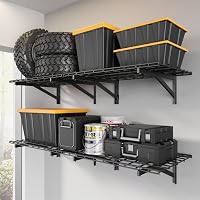
Overhead Racks vs Garage Shelves: Which Do You Need? (November 2026)
For overhead racks vs garage shelves, choose shelves for everyday tools and supplies, or overhead racks for manageable seasonal gear that frees floor space. Ceiling support, door clearance and safe retrieval should decide whether overhead storage works for you.
On this page (9 sections)
- Overhead racks vs garage shelves: which fits your garage?
- How do access and lifting change the decision?
- Which option handles heavy storage better?
- What should you measure before buying?
- Which of these 3 products suits your storage plan?
- How should you set up and care for either type?
- What mistakes make a combined layout harder to use?
- Sources
- Overhead racks vs garage shelves: what should you buy?
Choose garage shelves for frequent access and overhead racks for manageable seasonal storage that frees floor space. In the overhead racks vs garage shelves decision, safe access matters as much as how much gear you can fit.
A ceiling rack can clear a parking bay but adds overhead lifting. Shelves take up floor area, yet let you sort supplies, open bins and put things away with fewer steps.
Start with the items you handle most, then measure the space around them. Our complete garage shelving guide covers shelf types and sizes if accessible storage is your main need.


Overhead racks vs garage shelves: which fits your garage?
Choose overhead storage for a crowded floor and shelves for a busy storage routine. Neither works well if it blocks movement or makes putting things away harder.
A ceiling rack suits a garage where seasonal containers occupy space needed for parking. A floor shelf suits a workshop, household supply area or collection of bins that changes often.
Wall-mounted shelves offer another way to keep some floor area open while keeping supplies below the ceiling. Compare wall-mounted and freestanding garage shelving before committing to a layout.
When should you choose overhead racks over garage shelves?
Choose overhead racks when you have suitable ceiling framing, spare headroom and occasional-use gear. All 3 conditions matter because unused ceiling space isn't automatically usable storage space.
Good candidates include holiday decorations, empty coolers and manageable camping equipment. The items should be easy enough to raise, position and retrieve without awkward reaching.
Skip overhead storage if you cannot use suitable access equipment comfortably. It's also a poor choice for dense toolboxes, loose objects or anything you need to retrieve several times a week.
A useful buying check is to picture putting the largest container away. If that requires leaning over a car or lifting beyond your comfortable reach, change the location or choose shelves.
When are garage shelves the better choice?
Choose shelves for daily tools, household supplies and bins you open often. Separate levels make it easier to give each group a place without building stacks on the floor.
Shelves also suit items that should stay low because of their weight or awkward shape. You can arrange lighter containers higher while keeping demanding lifts closer to floor level.
Skip a deep freestanding unit if it leaves too little room to walk or open vehicle doors. A narrower shelf, wall-mounted option or different storage location may serve you better.
For renters, shelves can reduce the need for ceiling work, but don't assume they require no attachment. Check the assembly and anchoring requirements before choosing a unit.
How do access and lifting change the decision?
Count retrieval steps before comparing storage volume. Gear you need weekly belongs where you can reach it without turning each visit into a lifting job.
With shelves, place frequent-use items between comfortable waist and shoulder height where practical. Keep heavier objects lower, and avoid placing loose items above your head.
Overhead storage adds a separate access task before you even reach the container. Leave space for suitable access equipment and follow its instructions for footing, handholds and carrying loads.
Never climb the storage unit, stand on a rolling chair or use a vehicle as a step. If retrieving a bin prevents secure footing or a handhold, use a safer handling method or store it lower.
What containers work best overhead?
Use manageable containers with secure lids and visible labels. Split a large load into smaller containers if the full bin is awkward to control.
Label the side you can see from below, and group items by the occasion when you'll use them. Keep the next seasonal group near an accessible edge without overhanging the platform.
Don't pack containers so tightly that you must drag one across others to remove it. Allow handling room and keep loose pieces contained so they cannot fall through or off the rack.
What belongs on the easiest shelf levels?
Reserve the easiest levels for items you reach most often, including supplies that need frequent checking or refilling. A bin you open daily should not sit behind another full container.
Group gear by task, such as car care or gardening, rather than packing every gap. Leave enough space above bins to lift them out without scraping your hands against the shelf above.
Measure your largest containers before setting adjustable levels. Our guide to garage shelves for totes and bins explains how container size affects shelf layout.
Which option handles heavy storage better?
Compare the exact unit, its load rules and its support structure. A large capacity figure doesn't make an awkward overhead lift safe or prove that your ceiling can carry the installation.
For shelves, distinguish the total unit capacity from the limit for each level. Our guide to garage shelf weight limits explains why those figures cannot be used interchangeably.
Spread loads as the instructions require rather than concentrating dense objects in one spot. Don't assume you can put the entire unit's allowance on a single shelf.
For ceiling storage, the rack, fasteners and building framing form one load path. The weight of the rack itself also matters when assessing what the structure must support.
Read our guide to garage ceiling load capacity before planning substantial overhead storage. Get qualified help if the framing or acceptable load is uncertain.
Keep a simple inventory of stored weights when loading overhead storage. Weigh packed bins if needed, and remember that adding “just one more” container still changes the total.
What should you measure before buying?
Measure the storage area and the working space around it. The right dimensions must allow installation, normal garage use and safe retrieval.
For overhead racks, check the ceiling framing, door movement and vehicle height. For shelves, check floor space, wall position, aisle width and the route used to carry bins.
Measure the full overhead clearance
Check the garage door's entire travel, including its open position and moving hardware. Our guide to overhead garage door clearance helps you plan around that path.
Allow space for the rack and the containers above its platform. Also check lights, openers and other equipment that could interfere with placement or access.
Measure with the vehicle configuration you actually use, including roof accessories where relevant. A layout that clears a bare vehicle may not suit one carrying roof-mounted equipment.
Mark the proposed rack outline below with removable tape, then check where you would stand to load it. This reveals access conflicts that a ceiling measurement alone can miss.
Measure shelf depth and usable aisle space
Mark the shelf footprint on the floor and open nearby doors fully. Walk through while carrying your largest bin to see whether the remaining aisle works.
Account for baseboards, wall projections and uneven flooring when choosing a position. Shelves should stand as their instructions require, without improvised stacks of loose material beneath the feet.
Check the usable shelf opening as well as the unit's outside size. Uprights, shelf edges and the angle needed to remove a container can reduce the room available.
Which of these 3 products suits your storage plan?
VEVOR suits accessible storage; Jusgym and TOPIRON suit occasional overhead storage. Choose the format first, then compare the models that fit your space and routine.
The scores below reflect their fit for this comparison. VEVOR's higher score doesn't make it the better choice for a garage with no spare floor space.
VEVOR: choose it for regularly used supplies
The VEVOR 5-Tier Shelving 48x24x72 has a score of 8.8. Its 48 x 24 x 72 in size suits a dedicated storage wall where you can leave room to remove containers.
The adjustable levels help when your gear includes both short supply boxes and taller bins. Splitting the unit into 2 racks offers another layout when a single tall unit doesn't suit the space.
It has a powder-coated carbon steel frame and engineered wood shelf boards. Keep wet gear from sitting directly on the boards, wipe up spills and allow damp equipment to dry before storage.
Confirm capacity before loading heavy gear: VEVOR gives conflicting total and per-shelf load figures for this model. Ask VEVOR for the limits that apply to the exact unit, rather than choosing the higher number.
Jusgym: choose it for bulky seasonal bins
The Jusgym 4x8 Overhead Rack 750 lb has a score of 7.4. It suits households moving occasional-use containers out of a parking or work area.
Its 9 support beams and 8 pre-installed panel hooks are relevant to platform construction and setup. The hooks don't remove the need to verify ceiling support or follow the mounting instructions.
If joist spacing exceeds 24 in, Jusgym specifies compatibility only with 48 in ceiling spacing. Check the required mounting layout before buying, especially if you cannot see the framing.
Jusgym offers a lifetime limited warranty. Read its terms alongside the installation requirements if support coverage influences your choice.
TOPIRON: choose it for occasional camping gear
The TOPIRON 4x8 Overhead Rack 750 lb has a score of 7.2. Its main platform dimensions, capacity and adjustment range match Jusgym, so those figures don't favor one over the other.
TOPIRON also has 9 support beams and 8 pre-installed panel hooks. It uses the same mounting restriction when joist spacing exceeds 24 in, making framing compatibility a check for both models.
TOPIRON offers a 1-year limited warranty, which is shorter than Jusgym's stated coverage. Choose between them after checking the mounting instructions and support terms, rather than expecting different storage uses from similar designs.
How should you set up and care for either type?
Assemble and secure the storage before adding any load, then organize it around safe handling. Avoid filling a partly assembled unit just to clear space for the remaining parts.
Read the full instructions and identify every component before starting. For overhead work, arrange suitable help and access equipment rather than trying to hold large sections while fastening them alone.
Follow how to install overhead garage storage for the planning sequence. The rack manual controls the exact framing, fasteners, spacing and attachment method.
For shelves, seat every connection as instructed, confirm stable footing and complete any required anchoring. Set shelf heights around your containers before loading, since adjusting a full unit creates extra handling.
Load gradually and watch for movement, loose connections or visible deformation. Stop using the affected area if anything shifts, bends or pulls away from its attachment point.
Inspect connections and supports periodically, especially after an impact or a storage change. Unload before making adjustments, and replace damaged parts through the manufacturer rather than improvising repairs.
What mistakes make a combined layout harder to use?
The biggest mistake is filling every space without leaving room to retrieve anything. Shelves and overhead racks work together only when access to one doesn't block the other.
Don't place a deep shelf beneath the only practical loading edge of a ceiling rack. Keep space available to position access equipment without reaching across stored gear.
Avoid locating storage where a vehicle can strike it or where it blocks an electrical panel. Keep walking routes, doorways and required service access clear.
Don't store heavy gear overhead just because the rack's capacity appears sufficient. Keep items low when their shape or weight makes lifting them difficult to control.
Leave some room for items returning from use. A system packed to its limit often leads to temporary floor piles because putting things away requires moving too much first.
Sources
The product links below identify the shelf and overhead racks compared here. Check the exact model's instructions before assembly or mounting.
Overhead racks vs garage shelves: what should you buy?
Choose shelves first if regular access is your main need. Choose overhead racks when freeing parking space matters and you can confirm safe mounting, clearance and retrieval.
If ceiling support remains uncertain, resolve that before buying an overhead rack. If shelf depth would squeeze the aisle, revise the layout instead of accepting a daily obstruction.
For a mixed garage, start with accessible storage for frequent-use gear, then move manageable seasonal containers overhead. This gives each storage area a job without making everyday tasks depend on a ladder.
Use the overhead rack buying guide to compare ceiling options, or the garage shelving guide to plan accessible storage.
Frequently asked questions
Are overhead racks better than garage shelves?
Overhead racks are better for freeing floor space, while garage shelves are better for frequent access. Choose overhead storage for manageable seasonal gear only when ceiling support and clearance work; choose shelves for supplies you use often, heavy objects kept low and containers you need to open regularly.
Can an overhead rack hold more than a garage shelf?
Neither type always holds more because rack capacity, shelf capacity and building support are separate limits; Jusgym and TOPIRON each specify a 750 lb rack capacity, but that doesn't guarantee your ceiling's capacity. VEVOR gives conflicting load figures, so confirm its total and per-shelf limits before storing heavy gear.
Can you install an overhead rack without finding ceiling joists?
No, these ceiling racks need suitable structural framing and the attachment method required by their instructions; drywall alone cannot support the installation. Identify the framing, confirm its spacing and check for concealed services before drilling; get qualified help if you cannot verify the structure or required mounting layout.
Should garage shelves be anchored to the wall?
Follow the shelf manufacturer's anchoring instructions and address tipping risks before loading the unit; a tall shelf needs careful placement, correct assembly and stable footing, even when heavy items sit low. Read our guide to anchoring garage shelving when planning its position and choosing suitable wall attachment points.
Can you use overhead racks and garage shelves together?
Yes, shelves and overhead racks work together when each has a clear job and a clear access route; keep everyday supplies on shelves and manageable seasonal items overhead. Leave room to position access equipment, open vehicle doors and retrieve bins without reaching across a shelf or parked car.