REIBII Garage Shelving Review: Worth It? (November 2026)
The REIBII 2 Pack Garage Shelving is the best fit here for two storage zones with flat shelves. Choose this REIBII garage shelving for smaller bins and household supplies; choose a deeper or wheeled model for bulky containers or moving storage.
On this page (10 sections)
- REIBII garage shelving: who should buy the 2-pack?
- How much space does the 2-pack need?
- How much weight should you put on each shelf?
- Are MDF or wire shelves better for your supplies?
- How should you arrange adjustable or split shelves?
- What matters during assembly and anchoring?
- Which other REIBII shelf fits your storage plan?
- How do you care for the shelves after setup?
- Which buying mistakes should you avoid?
- Which REIBII garage shelving should you buy?
The REIBII 2 Pack Garage Shelving is the best fit here for two storage zones and small items that need flat shelves. This REIBII garage shelving makes sense for separating tools from household supplies or fitting storage into two available spaces.
Choose a different model if your main need is deep tote storage, one broad rack or rolling access. Start with the items you need to store, then choose the shelf layout around them.
REIBII garage shelving: who should buy the 2-pack?
Buy the 2-pack if two smaller racks fit your room better than one wide unit. Its flat shelves also suit jars, small boxes and containers that could sit unevenly on wire.
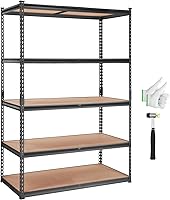
REIBII 2 Pack Garage Shelving: Best for two storage zones

- 2 units
- 36 x 16 x 72 in each
- 5 adjustable tiers per unit
- Flat MDF shelves
Choose this pair for separate storage zones or smaller items that need a flat surface. Adjustable tiers let you group supplies by height.
Pros
- Two units provide 10 tiers total
- Adjustable shelf positions
- Each unit can split into two shorter sections
- Flat shelves support small containers
Cons
- Shallow shelves limit bulky storage
- MDF boards need protection from standing water
- Two units need separate floor footprints
One unit can hold frequently used workshop supplies while the other holds seasonal household storage. Keeping those groups apart means you can reach everyday items without shifting boxes you rarely open.
The pair also suits a garage with wall space broken up by a door, window or workbench. You can place each rack where it fits instead of searching for one long, clear wall.
Who should skip this REIBII garage shelving?
Skip the 2-pack if your largest containers need deeper shelves, or if you only have room for one rack. Buying two units helps only when you have a useful place for both.
It's also a poor match for a spot that regularly gets wet. MDF shelf boards need protection from standing water, so resolve leaks and floor splash before choosing this setup.
How much space does the 2-pack need?
Each rack needs its own clear floor footprint plus room to remove stored items. The set provides 10 tiers across two units, but the usable arrangement depends on your containers and access space.
| Detail | REIBII 2 Pack Garage Shelving |
|---|---|
| Units | 2 |
| Size per unit | 36 x 16 x 72 in |
| Tiers per unit | 5 adjustable |
| Shelf surface | 5 mm MDF |
| Frame | Steel with 1.4 mm rolled-edge posts |
| REIBII-stated capacity | 2,400 lb per unit; 480 lb per tier with evenly distributed weight |
| Assembly | Interlocking frame without nuts or bolts |
| Included | Rubber hammer, gloves, instructions and wall-anchoring kit |
Mark both footprints on the floor with removable tape. Then open nearby doors, pull out workbench drawers and check the path you use when carrying bulky items.
Measure containers across their lids and handles, not just their bases. Outer rack width isn't the same as clear space between uprights, and a tote that fits on a shelf may still be awkward to pull out.
Leave enough space above containers to grip them without scraping the shelf above. For help matching shelf depth to your belongings, see how deep garage shelves should be.
How much weight should you put on each shelf?
Stay within both the per-tier and whole-unit limits, with weight spread across the shelf. REIBII's capacity figures assume evenly distributed loads, not one heavy object pressing on a small area.
A metal support rod sits beneath each MDF board to help transfer load across the shelf and frame. Install every required support before loading, even if your first batch of boxes feels light.
Group heavy items on lower tiers and use upper shelves for lighter supplies. Keep dense objects spread out rather than stacking all of them at one end or in the center.
A shelf's spare capacity doesn't increase the limit of another tier. It also doesn't make the rack suitable for climbing, sitting or standing on.
If you're storing dense tools or bulk supplies, estimate the weight of each group before loading. The garage shelf weight guide explains load distribution and the limits that matter during setup.
Are MDF or wire shelves better for your supplies?
Choose MDF for a continuous surface and wire for open storage. The right choice depends on the bases of your containers and how you use the space.
Flat boards support narrow jars, small boxes and supplies that might tilt between wires. They also make it easier to slide a small container forward without catching its base in a gap.
Wire lets air move through the shelf, but small parts still need bins or trays. Check that container feet sit securely across the wires rather than landing between them.
Neither surface removes the need for sensible storage habits. Keep liquids in suitable containers and avoid placing damp tools or leaking bottles directly on shelf boards.
Compare the pros and cons of wire and solid garage shelving if surface choice is your main buying decision.
How should you arrange adjustable or split shelves?
Set shelf heights around the items you reach for most, then use the remaining space for less frequent storage. Adjustable tiers help only when the gaps match what you own.
Sort supplies into tall containers, short containers and loose items before assembly. Put small supplies in labeled bins so you can move a whole group without picking up each piece.
Avoid making every shelf gap equal by habit. A tall gap above shallow boxes wastes space, while a tight gap above a heavy tote makes it hard to lift safely.
Each unit can split into two shorter sections, which helps below a window or beside a workbench. This spreads storage across more floor space, so plan the shorter sections before taking apart a tall rack.
Follow REIBII's arrangement instructions and unload shelves before changing their height. Keep frequently used items within easy reach so daily access doesn't depend on a step stool.
What matters during assembly and anchoring?
Build on a level, suitable floor and fully seat every connection before loading. The interlocking frame reduces loose hardware, but alignment and support placement still need care.
REIBII gives an assembly estimate of about 10 minutes per unit. Allow extra time to sort parts, plan shelf heights and arrange wall anchoring rather than treating that estimate as a deadline.
Wear the included gloves and use the rubber hammer as directed to seat the beams. Work through the frame in order, checking that matching beams sit at the same height.
Install the shelf supports and boards before adding stored items. If the empty rack rocks or connections won't seat properly, correct the setup before loading it.
Use the included wall-anchoring kit according to the instructions, with fixings suited to the wall. An anchor helps control tipping; it doesn't raise the shelf's load limit or replace secure frame connections.
Read whether garage shelving needs wall anchors before choosing the final location. Make sure you can reach a suitable fixing point without blocking utilities.
Which other REIBII shelf fits your storage plan?
Choose the alternatives for one broad storage area, rolling access or deeper containers. Each changes how you use the room, so compare access and floor space before capacity.
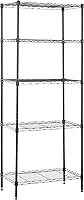
REIBII 5-Tier Wire Garage Shelving: Best for shared supply storage

- 55.5 in wide
- 18 in deep
- 5 adjustable tiers
- Wire shelves
A broad wire unit suits households keeping several supply groups together. Choose containers with bases that sit securely across the wire.
Pros
- Broad shelves keep supplies together
- 5 adjustable tiers
- Can split into two sections
- Includes leveling feet and anti-tip hardware
Cons
- Small loose items need containers
- Needs a wider uninterrupted wall space
Choose the wire unit for shared supply storage
The 5-tier wire unit suits households keeping several supply groups together on one broad rack. It measures 55.5 x 18 x 71 in, with adjustable shelves, leveling feet and anti-tip hardware.
REIBII states a capacity of 640 lb per tier and 3,200 lb total. Its reinforced wire shelves suit larger containers with stable bases, while small loose items need bins.
Choose it for a clear wall where you want supplies visible in one place. Skip it if your available storage space is split between rooms or narrow wall sections.
The rack can separate into two sections, but plan the resulting layout before assembly. The REIBII 5-Tier Wire Garage Shelving review covers this configuration in more detail.
REIBII 4-Tier Shelving With Wheels: Best for changing workshop layouts
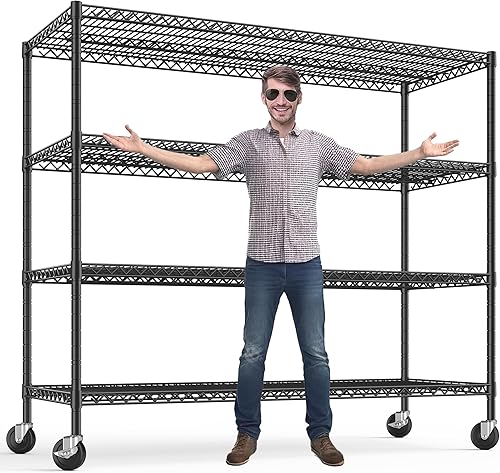
- 55.52 in wide
- 24.02 in deep
- 4 tiers
- Lockable casters
Choose this rack when you need to clear a work area or reach storage from different sides. Its capacity is lower on wheels than on leveling feet.
Pros
- Includes casters and adjustable feet
- Two casters lock
- Adjustable shelf heights
- Deep shelves suit larger containers
Cons
- 780 lb total capacity on wheels
- Large footprint needs a clear movement path
- Four tiers provide fewer separate storage levels
Choose the wheeled unit for changing workshop layouts
The 4-tier wheeled unit suits a workshop where storage needs to move to clear a work area or provide access behind the rack. Its 55.52 x 24.02 x 75.62 in size needs both parking space and a clear route.
It comes with 4 casters, including 2 that lock, plus adjustable leveling feet. REIBII states 780 lb total on wheels, compared with 2,480 lb total and 620 lb per tier on feet.
Choose it when mobility is part of your regular routine. Skip it for fixed heavy storage if you would only use the wheels during the first setup.
Remove loose or unstable items before moving a rack, reduce the load and follow its movement instructions. Lock the casters while parked, and compare garage shelves on wheels if rolling storage is your priority.
REIBII 48-Inch Deep Warehouse Shelving: Best for bulky tote storage

- 48 in wide
- 24 in deep
- 5 adjustable tiers
- Freestanding
Choose this deeper MDF-shelf unit for bulky containers and tools. Measure tote bases and lids to confirm the arrangement before buying.
Pros
- Deep shelves support bulky storage
- Tiers adjust in 1.4 in steps
- Can split into two sections
- Two reinforcing ribs beneath each shelf
Cons
- Deeper footprint reduces aisle space
- MDF boards need protection from standing water
- One storage unit rather than a pair
Choose the deeper MDF unit for bulky containers
The warehouse unit suits bulky totes and tools that need a deeper, continuous shelf surface. Despite its display name, it's 48 in wide and 24 in deep, with a height of 72 in.
Its 5 tiers adjust in 1.4 in steps, with 2 reinforcing ribs beneath each shelf. REIBII states a capacity of 616 lb per tier and 3,080 lb total.
Choose it when your containers fit comfortably and the deeper frame still leaves a useful aisle. Skip it for mostly small supplies, since items at the back can become hard to see and reach.
Don't assume a tote count from its gallon size alone. Container shapes vary, so measure the actual bases, lids and usable shelf space before planning rows.
For more choices across brands and formats, see best heavy duty garage shelving.
How do you care for the shelves after setup?
Keep shelves dry, clean and free of damaged parts. The 2-pack's care instructions call for wiping with a dry cloth, so avoid soaking its MDF boards during cleaning.
Wipe up spills promptly and dry wet containers before putting them away. Powder-coated steel still deserves care, especially where scraping tools or sliding bins damage the finish.
Check connections, shelf supports and anchors after moving or rearranging the rack. Unload any shelf with a bowed board, loose connection or visible damage before deciding what needs repair or replacement.
Store small parts in containers that you can remove easily for cleaning. Labels on the front of bins help you find supplies without repeatedly shifting the load.
Which buying mistakes should you avoid?
Avoid choosing by total capacity alone. A rack can have ample load capacity yet still be wrong for your tote size, available wall space or need to move it.
- Measuring only empty floor space: check doors, drawers, vehicle access and the room needed to remove bins.
- Confusing width with depth: the warehouse model's display name doesn't mean it extends 48 inches from the wall.
- Assuming all totes fit alike: measure lids, handles and bases, even when containers share a gallon size.
- Using a stationary limit on casters: the wheeled model has a separate, lower rolling capacity.
- Loading before finishing assembly: fit every support and complete the anchoring plan first.
- Buying unused shelf depth: deep shelves can hide small supplies behind larger containers.
If several of these tradeoffs affect your room, use the complete garage shelving guide to plan the layout before choosing a rack.
Which REIBII garage shelving should you buy?
Choose the 2-pack for separate storage zones, the broad wire rack for shared supplies, the wheeled model for changing layouts or the deeper MDF unit for bulky containers. Buy the configuration that solves your storage task without crowding the route around it.
Before ordering REIBII garage shelving, confirm your largest container's fit, the access space and the load limit for your planned setup. If another brand is still on your shortlist, compare the VEVOR shelving review against those same needs.
Frequently asked questions
How big is each REIBII 2 Pack Garage Shelving unit?
Each unit measures 36 inches wide, 16 inches deep and 72 inches tall, with 5 adjustable tiers; measure your containers at their widest points, including lids and handles, and allow room to lift them out. Two units placed together also need space for both frames.
How much weight can the REIBII 2 Pack Garage Shelving hold?
REIBII states a capacity of 2,400 lb per unit and 480 lb per tier with evenly distributed weight; both limits apply, so unused capacity on one shelf doesn't let you overload another. Keep heavy items low, spread loads across the shelf and follow the assembly and anchoring instructions.
Can you adjust or split the REIBII 2 Pack Garage Shelving?
Yes, each unit has adjustable tiers and can split into two shorter sections; plan shelf spacing around your containers, leaving room to grip handles and remove lids. Unload the affected shelves before changing their positions, and follow REIBII's instructions for the supports and connections in each arrangement.
Is the REIBII 2 Pack Garage Shelving better than wire shelving?
Choose the MDF shelves for small containers and supplies that need a continuous surface; choose wire when your items have stable bases and you prefer open shelves. MDF needs protection from standing water, while small items on wire often need trays or bins to keep them contained.