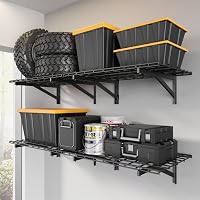
Plastic vs Metal Garage Shelving: Which Is Better? (November 2026)
For garage shelving plastic vs metal, choose plastic for damp spaces and routine bin storage, or metal for adjustable spacing and bulky items. Match the shelf's confirmed load limits and usable dimensions to your belongings before buying.
On this page (13 sections)
- Garage shelving plastic vs metal: which should you buy?
- Does plastic or metal shelving hold more weight?
- Who should choose the PrimeZone metal shelves?
- Who should choose the CX plastic shelves?
- Who should choose the ZEUKMXOO plastic shelves?
- Which material works better in a damp garage?
- Are wire or plastic shelves better for storage bins?
- How much garage space should you allow?
- How should you assemble and secure the rack?
- How should you load and organize garage shelves?
- What care do plastic and metal garage shelves need?
- Which buying mistakes should you avoid?
- Which plastic or metal garage shelf should you choose?
Garage shelving plastic vs metal: which should you buy?
Choose plastic for damp spaces and routine tote storage, or metal when adjustable shelf spacing and deeper storage fit your belongings better. For garage shelving plastic vs metal, the right unit depends on load, fit and placement.
A broad plastic rack can be a better choice for household bins than a deep metal rack that crowds your car. A metal rack with adjustable tiers makes more sense when tall equipment and short containers need different gaps.
These 3 options cover those needs: PrimeZone for mixed storage, CX for matching totes and ZEUKMXOO for a smaller footprint. Material is the starting point, not the final decision.


What matters more than plastic vs metal garage shelving?
Start with your heaviest filled container and largest awkward item. Those tell you more about the rack you need than labels such as heavy duty.
Group your belongings into items you reach for often, seasonal storage and dense loads. Plan where each group will sit before choosing shelf spacing or depth.
If you are starting a garage layout from scratch, our complete garage shelving guide covers the main storage styles and where each fits.
Does plastic or metal shelving hold more weight?
Compare the exact unit's limits, because plastic and metal are not fixed strength classes. Both the per-shelf limit and any total limit must suit your storage plan.
CX states 200 lb per shelf, while ZEUKMXOO states 140 lb per shelf and 700 lb total. Those figures apply to their own designs and loading instructions, not to every plastic rack.
PrimeZone gives conflicting figures: 550 lb per tier, 2,500 lb total and a separate 2,200 lb figure. Confirm the applicable limits with PrimeZone before buying it for dense tools or other heavy loads.
Do not multiply a per-shelf figure and assume the result is an approved total. Our garage shelf weight limit guide explains how shelf and whole-unit limits work together.
Why load shape matters
Spread-out weight is different from a concentrated load. A heavy object resting on a few small feet puts pressure on a smaller area than a broad container.
PrimeZone calls for evenly distributed items. For any rack, follow the brand's guidance rather than assuming that staying below a weight figure makes every load arrangement suitable.
Weigh bins when full and leave room in your plan for what you may add later. Compare light-duty vs heavy-duty garage shelving if your storage mixes bulky lightweight goods with dense equipment.
Who should choose the PrimeZone metal shelves?
Choose PrimeZone for varied item heights and bulky storage when its deeper footprint fits your garage. Its adjustable tiers let you leave a larger opening for tall items without wasting the same height on every shelf.
The rack measures 48 in wide, 24 in deep and 72 in high. It has metal wire shelves, a middle support beam on each tier and metal connectors between the upper and lower support rods.
That layout suits a mix of boxes and equipment better than a plan built around identical bins. You can also arrange it as 2 horizontal units, following PrimeZone's instructions.
Skip it if you mainly store loose small parts, need a shallow rack beside a parked vehicle or want an easy unit to reposition. At 64 lb, the empty rack takes more effort to move than either plastic option here.
Small items need containers that sit securely across the wire surface. Its unresolved load figures also make it a poor choice for heavy storage until PrimeZone confirms the limits.
Who should choose the CX plastic shelves?
Choose CX for a matching tote system where you want containers arranged in clear, repeatable rows. It accommodates up to 10 CX Black & Yellow 27-gallon containers.
The unit measures 48 in wide, 20 in deep and 72 in high. Usable clearance between the poles and shelves is 42 in wide, 16.2 in deep and 14.68 in high.
Those inside measurements matter more than the outside dimensions when checking another brand's bins. Measure the widest point of the lid, handles and base, not just the container's main body.
CX includes adjustable feet and wall-mount brackets, and its interlocking connectors let you link units to increase width or depth. That suits a storage row you may expand later, provided the added footprint fits.
Skip it if your main items need large, varied vertical gaps or more usable depth. A container labeled 27 gallons is not automatically the same shape as the matching CX tote.
Who should choose the ZEUKMXOO plastic shelves?
Choose ZEUKMXOO when floor space is the main constraint and your containers fit a narrower rack. Its footprint is 35.43 in wide by 16.93 in deep.
That smaller footprint helps where a broad rack would block access to cabinets or crowd an aisle. Open-slatted polypropylene shelves also allow air to move around stored items.
The unit has adjustable feet and tool-free snap-fit assembly. ZEUKMXOO describes it as suitable for indoor and outdoor use, with moisture-resistant and UV-resistant material.
Skip it for wide bins, oversized equipment or loads that need more shelf capacity. Its 27-gallon bin compatibility claim is not enough to confirm that your particular container will fit.
Published height figures range from 72 to 72.44 in. Confirm the assembled height if it must fit under a fixed obstruction, allowing for any foot adjustment.
Which material works better in a damp garage?
Plastic is the simpler choice where rust is your main concern. It still needs a sensible location, regular cleaning and loads that suit the rack.
CX describes its resin unit as suitable for everyday indoor or outdoor use. ZEUKMXOO also allows indoor or outdoor placement, but cautions that prolonged, intense direct sunlight can gradually affect the plastic's lifespan.
PrimeZone has a powder-coated finish. Keep it away from standing water where possible, and inspect areas where dragging containers or tools could scratch the coating.
Neither shelf material protects cardboard boxes or fabric stored in a damp room. Use suitable containers, put away dry belongings and address leaks or condensation rather than expecting the rack to solve moisture problems.
For outdoor placement, follow the brand's location guidance and consider exposure to sun and wind. Permission to use a rack outdoors does not make every exposed location suitable.
Are wire or plastic shelves better for storage bins?
Choose by usable space and base support, not by the shelf material alone. Plastic shelves can have openings too, as ZEUKMXOO's slatted design shows.
Measure each bin at its widest point, then check the base separately. A lid can catch between posts even when the bottom fits, while narrow feet can settle into gaps beneath it.
Leave enough space above the bin to grip and remove it. A container that barely slides into an opening may be awkward to lift when full.
PrimeZone offers the deepest outside footprint here, but outside depth does not confirm full support for every bin base. Check that the container rests securely without relying on unsupported overhang.
Read wire vs solid garage shelving for surface choices, or compare garage shelves for totes and bins if containers drive your whole storage plan.
How much garage space should you allow?
Measure the rack, your belongings and your access route. A shelf that fits against the wall can still stop a car door from opening or block a cabinet.
Mark the footprint on the floor with removable tape. Open nearby doors and drawers, then walk through carrying your largest bin to check the space you actually need.
Depth should match what you store rather than fill every available inch. Deep shelves can hide small items at the back, while shallow shelves make large containers harder to support.
Use lower, easy-to-reach tiers for things you lift often. Avoid a layout that forces you to stretch over a car or lift a heavy bin above shoulder height.
Our guide to garage shelving depth helps balance storage and access. For width, height and clearance together, see what size garage shelving you need.
How should you assemble and secure the rack?
Build the rack where it will stand, level it and follow its securing instructions before loading. Plan shelf gaps first so you do not have to empty the rack to correct an awkward layout.
Both plastic options use tool-free assembly. PrimeZone uses a bolt-free interlocking design and includes a rubber mallet and gloves; all 3 brands describe assembly as taking about 10 minutes.
Allow extra time to sort parts, read instructions and check connections. A short assembly estimate does not include clearing the garage or working out your storage layout.
For snap-fit parts, confirm each connection is fully seated before adding the next level. For adjustable tiers, check that both ends are set at the same height and all supports engage as directed.
Adjustable feet help level a rack on minor floor unevenness. They do not replace wall restraints or make a badly sloped location suitable.
CX includes wall-mount brackets, but choose fasteners for your wall construction. Linking racks together also does not replace any securing steps required by the brand.
How should you load and organize garage shelves?
Put dense, heavy items low and keep frequent-use items easy to reach. This reduces awkward lifting and helps keep the storage plan stable.
Load gradually, following the brand's distribution instructions. Do not cluster several dense objects in the middle of a shelf just because space remains around them.
Store small hardware in containers with bases that suit the shelf surface. Avoid balancing loose tools across wire or slat gaps where they can fall through or shift.
Label bins on the side facing the aisle. Group related items together so you can remove one container without unloading a whole shelf.
Keep a clear route to the rack and use a suitable step stool for upper tiers. Never climb the shelves or use an open bin as a step.
What care do plastic and metal garage shelves need?
Clean spills promptly and inspect the rack whenever you reorganize it. Changes in shape, loose connections or damaged parts need attention before you add more weight.
For plastic, follow the brand's cleaning guidance and avoid dragging sharp objects across shelf surfaces. Check for cracks or bowing, especially beneath dense containers.
For metal, remove moisture and dirt, including residue carried in from wet or salty equipment. Inspect the finish at corners, joints and places where bins rub.
Unload the rack before moving it or changing shelf heights. Pulling a loaded unit across the floor can strain connections and make the load shift.
If a shelf develops visible sagging, cracks or a loose joint, unload it and resolve the cause. Do not hide the problem with a liner or extra board.
Which buying mistakes should you avoid?
Avoid buying by total capacity, outside size or material name alone. Those shortcuts miss the details that decide whether a rack will work in daily use.
A large total capacity cannot compensate for an overloaded individual shelf. Likewise, a wide rack may have much less room between its posts than its outside width suggests.
Do not choose the deepest unit automatically. Extra depth only helps when your items use it and you can still reach them safely.
Avoid adding improvised liners or supports without the brand's approval. They can change how weight reaches the shelf and may cover openings intended for the rack's design.
Finally, do not buy matching bins before checking the actual shelf openings. Confirm the fit with one container before committing to a whole row.
Which plastic or metal garage shelf should you choose?
Choose PrimeZone for flexible mixed storage, CX for matching tote rows or ZEUKMXOO for a tight footprint. In the garage shelving plastic vs metal decision, buy for your actual containers, access space and confirmed loads.
Choose PrimeZone when adjustable gaps and deeper wire shelves solve a specific storage problem. Resolve the capacity conflict before making it your heavy-storage rack.
Choose CX when you want a broad bin system with matching containers. Choose ZEUKMXOO when saving aisle space matters more than fitting wide or deep equipment.
Before ordering, write down your largest container's dimensions and heaviest planned shelf load. Use those numbers to compare best garage shelving units, or consider wall-mounted garage shelving if you need to keep the floor clear.
Frequently asked questions
Is plastic or metal better for garage shelving?
Plastic is a useful choice for damp areas and routine bin storage, while adjustable metal shelving suits mixed item heights and deeper storage needs. Choose the exact unit by usable shelf space, confirmed load limits and assembly requirements; neither material name tells you how much weight every rack can hold.
Can plastic garage shelves hold heavy items?
Plastic shelves can hold heavy items within their stated limits: CX specifies 200 lb per shelf, while ZEUKMXOO specifies 140 lb per shelf. Weigh filled containers and follow the brand's load placement instructions; a compact metal tool can place more stress on one spot than a broad bin of equal weight.
Do metal garage shelves rust?
Metal garage shelves can rust when moisture reaches exposed metal, especially where a protective finish is scratched. Keep shelves dry, clean off road salt and inspect joints and shelf edges during routine cleaning; plastic avoids rust, but heat, sunlight and overloading can still affect its condition and useful life.
Are wire shelves good for storage bins?
Wire shelves work well when the bin base spans the wires securely and stays fully supported; check for small feet, narrow runners or uneven bottoms that could settle into gaps. Use a liner only if the shelf brand permits it; our wire vs solid garage shelving guide explains the surface tradeoffs.
Should garage shelving be anchored?
Secure garage shelving according to the brand's instructions, using fasteners suited to the wall construction; CX includes wall-mount brackets, but you still need to choose suitable wall hardware. Leveling feet do not replace anchoring; our garage shelving anchoring guide explains what to check before you secure and load a unit.